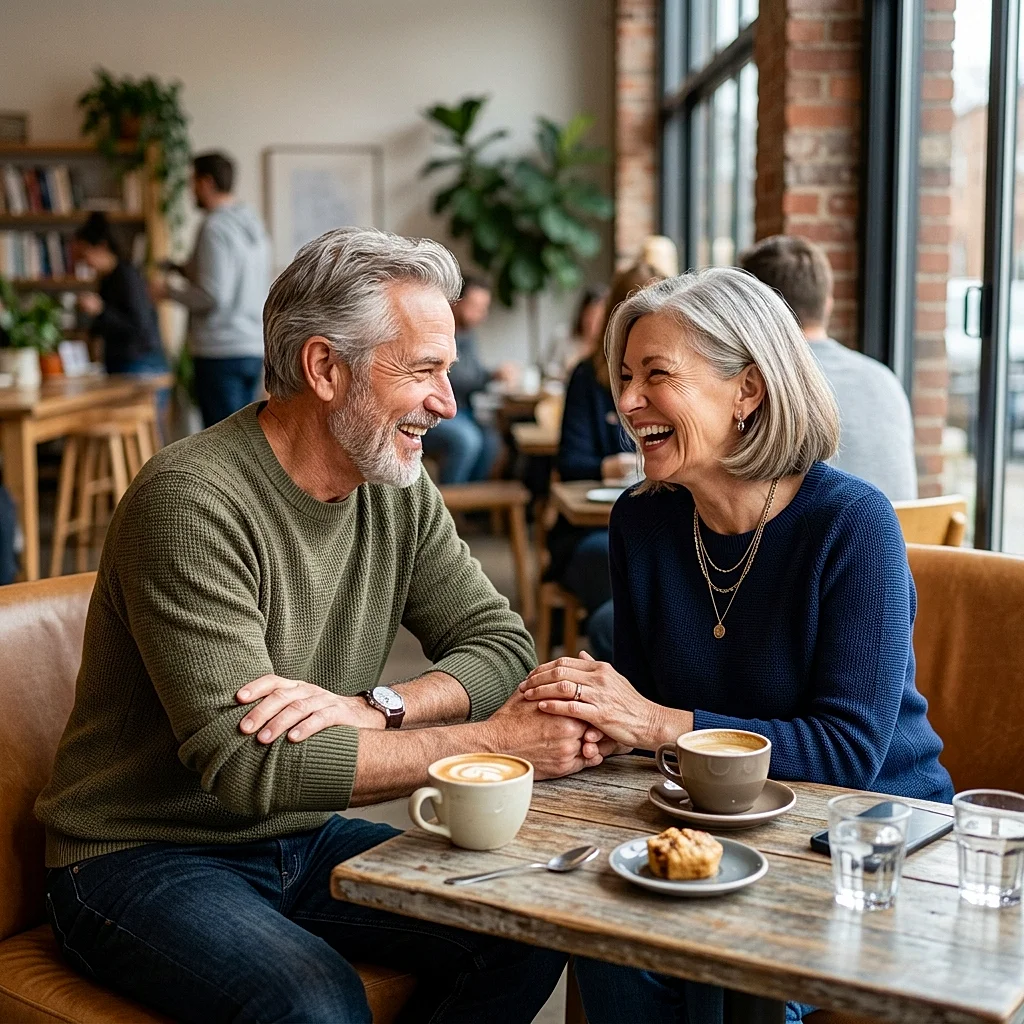
If you're trying to figure out dating 60 and over, you probably feel a bit like you've been dropped into a foreign country without a phrasebook. The rules have shifted dramatically since you were last single. The "meet cute" at the grocery store has been replaced by swiping on a phone screen, and terms like ghosting, catfishing, and breadcrumbing sound like a completely different language.
But here's the thing most people won't tell you: dating in your 60s, 70s, and beyond can actually be better than dating in your 20s. You know who you are. You're not scrambling to build a career or raise small children. You've got zero patience for nonsense, and you're not looking for someone to complete you — you want someone who fits into the full, rich life you've already built.
Whether you're stepping back into the dating world after a divorce, the loss of a spouse, or just a long stretch of being happily solo, there are more senior singles looking for companionship right now than at any point in history. The real barrier isn't a shortage of good people. It's learning how to navigate this modern landscape safely and without losing your mind in the process.
This guide covers all of it — from where to find real matches, to protecting yourself from scammers, to opening your heart again without sacrificing the peace you've earned.
37%
of adults aged 60+ who are single say they are actively looking for a relationship or casual dates, according to a 2023 Pew Research Center study.
📋 What's Inside This Guide
- The Changing Landscape
- Overcoming Emotional Hurdles
- Where to Actually Meet People
- Romance Scam Safety
- Mastering the First Date
- Intimacy & Building a Future
- Profile Optimization
- Senior Dating Red Flags
- Dealing with Adult Children
- Financial Boundaries
- Health Conversations
- Matchmakers vs. Apps
- Long-Distance & Snowbirds
- Final Thoughts
1. The Changing Landscape of Senior Dating
The first step to finding success is unlearning the old playbook. A few decades ago, dating followed a strict progression: meet someone, court them, get married, merge finances, build a household. Today, senior singles are rewriting what a successful relationship actually looks like — and honestly, the new version is a lot more flexible.
The Rise of LAT (Living Apart Together): One of the biggest trends right now is the "LAT" arrangement. Plenty of people over 60 love their homes, their daily routines, and their independence. They want a committed, romantic relationship, but they have no interest in moving in together or combining bank accounts. Once you realize you don't have to follow the old escalator of courtship-to-marriage-to-shared-mortgage, a huge amount of pressure melts away from those early dates.
The Stigma Has Faded: A decade ago, there was still a lingering embarrassment around online dating — especially for older folks. That's largely evaporated. Over 30% of marriages and long-term partnerships now start online, and that percentage climbs even higher for the 60+ crowd, many of whom have smaller social circles after retirement or a move to a new city.
Straight Talk Beats Mind Games: Remember waiting three days to call someone back? That whole "playing hard to get" routine? When you're dating 60 and over, time feels precious. Direct, honest communication is the norm. If you like someone, you say so. If the spark isn't there, you wish them well and move on. No games, no drama. It's actually refreshing.
"At 60, you're not looking for someone to complete you. You're looking for someone who complements the life you've already built."
2. Overcoming the Emotional Hurdles
Before you download a single app or RSVP to a singles mixer, the most important work happens between your ears. Dating later in life carries emotional weight that younger people simply don't deal with. You're not starting fresh — you're bringing decades of joy, pain, and complex history to the table. Acknowledging that history, rather than stuffing it down, is what leads to genuinely healthy new connections.
Dating After the Loss of a Spouse
For widows and widowers, the idea of dating again often comes wrapped in guilt. You might feel like you're betraying the memory of your late husband or wife. You might worry about what the kids will think. Here's what therapists and grief counselors consistently say: the human heart doesn't have a fixed capacity. Loving someone new doesn't erase what you had with your late partner. It just opens a different chapter.
When you feel ready (and there's no calendar for that — it could be two years or ten), be honest with the people you date. You don't need to unpack your entire grief story over the first cup of coffee. But a simple acknowledgment — "I was married for 35 years and lost my wife in 2022" — honors your journey. Anyone worth dating will respect that.
Dating After a Late-in-Life Divorce
"Gray divorce" — divorce after 50 — has roughly doubled over the past two decades. Jumping back into the dating pool after a 30- or 40-year marriage can do a number on your confidence. You might feel rusty, suspicious, or just plain overwhelmed.
Here's the one rule that matters most: don't turn your dates into therapy sessions. It's natural to feel bitter or hurt after a difficult split, but dumping that negativity onto someone you just met is a surefire way to scare them off. People dating 60 and over are looking for warmth and positivity. Talk about what you're building now — your hobbies, your travel plans, the things that make you laugh — not the wreckage of what came before.
The Fear of Physical Vulnerability
Let's talk about the elephant in the room: bodies change. The thought of being physically close with someone new — of being truly seen for the first time in decades — keeps a lot of seniors on the sidelines entirely.
But think about it this way: the person across the table from you is in their 60s or 70s too. They've got the same creaky knees, the same surgical scars, the same shifting waistline. The shallow physical standards of youth tend to fall away at this stage. What replaces them is something deeper — an appreciation for warmth, humor, and genuine human connection. Confidence in who you are right now is far more attractive than pretending to be 25.
✅ Emotional Readiness Checklist
- ☐ Stop Comparing: Don't measure every new date against your late spouse or your ex. Each person brings something completely different.
- ☐ Accept the Baggage: At 60+, everyone's carrying something. The goal isn't to find someone with an empty suitcase — it's to find someone whose baggage fits alongside yours.
- ☐ Guard Your Peace: You've earned the right to be selective. If a new connection brings more stress than joy, walk away.
3. Where to Actually Meet People
The number-one complaint from people dating 60 and over is simple: "Where on earth do I find single people my age?" If your entire social circle is married, it can feel isolating. The good news? There are two solid avenues, and using both at the same time gives you the best shot.
Avenue 1: Senior-Specific Dating Platforms
If you tried Tinder or Bumble and walked away feeling overwhelmed and invisible, that's normal. Those apps are built for twentysomethings. For the 60+ crowd, you need to fish in the right pond.
Paid, senior-focused platforms (think OurTime or SilverSingles) are a different experience entirely. Yes, there's a monthly fee — usually $20 to $40. But that paywall filters out the majority of bots, scammers, and time-wasters. When someone shells out $30 a month to be on a dating site, they're serious about actually meeting in person. Just make sure your profile is honest, upbeat, and features recent, well-lit photos. No decade-old vacation snapshots.
Avenue 2: Offline "High-Affinity" Spots
If apps aren't your thing, you'll need to be proactive in the real world. Sitting home and hoping fate delivers a partner to your doorstep isn't a strategy. But generic singles mixers at hotel bars? Usually a letdown for seniors.
Instead, look for "High-Affinity" environments — places where people gather regularly around a shared interest. Because you already have something in common, conversation happens naturally.
- Community College Classes: Sign up for art history, creative writing, or a language course. Weekly attendance gives you time to build genuine rapport instead of forcing small talk with a stranger.
- Niche Volunteering: Skip the generic shifts. Find a cause you're genuinely passionate about — a local animal rescue board, a historic preservation group, a museum docent program. These attract thoughtful, community-minded people.
- Walking and Hiking Groups: The endorphins are flowing, the conversations happen side-by-side (less intimidating than face-to-face), and you instantly know the other person values their health.
4. Safety First: The Reality of Romance Scams
We need to have a blunt conversation about safety. The vast majority of people you'll encounter while dating 60 and over are genuine, kind people looking for the same thing you are. But this age group is also the primary target for organized, sophisticated romance scammers — and the financial losses can be devastating.
These con artists, often called "catfish," build fake profiles using stolen photos — usually of attractive, middle-aged military officers, doctors, or engineers supposedly working overseas. They're trained in emotional manipulation, flooding you with affection (a tactic called "love-bombing") within days of first contact.
Here are the non-negotiable rules for staying safe online:
🚨 The 3 Rules That Will Protect You
Rule 1: Never Send Money. Period.
It doesn't matter how convincing the story is, how urgent the "emergency," or how deeply they claim to love you. If someone you've only communicated with online asks for money, gift cards (especially Apple or Amazon cards), or cryptocurrency — it is a scam, every single time. Block them immediately.
Rule 2: Watch for the "Overseas" Excuse.
Scammers always have a bulletproof reason they can't meet you or hop on a video call. Classified military deployment. Stuck on an oil rig. Business crisis in Dubai. If someone you've been chatting with for two weeks still refuses a simple FaceTime or Zoom call, end the conversation.
Rule 3: Beware the Emotional Fast-Track.
If someone is calling you "soulmate" or planning your wedding after three text exchanges, they're manipulating you. Real connection takes time to develop. Scammers rush the emotional timeline so they can ask for money before your rational brain catches up.
📖 Related Reading
New to online dating? Understanding how scammers operate is your best line of defense. Read our complete guide: How to Spot a Catfish: 25 Red Flags & Romance Scam Warning Signs.
5. Mastering the First Date
If your last first date involved a Reagan-era movie theater, the prospect of sitting across from a stranger in 2026 might feel terrifying. What do you wear? Who picks up the tab? How long should it last? Take a breath. First dates at this stage of life are fundamentally different from the ones you remember. They're less about performing and more about figuring out whether you genuinely enjoy each other's company.
The "Zero Pressure" Coffee Date
Here's the cardinal rule: your first meeting should never be a fancy sit-down dinner. Dinner creates way too much pressure. If you realize within five minutes that there's no spark, you're now stuck at a table for two hours pretending to enjoy your entrée.
Instead, keep the first meeting simple — coffee, a walk through a park, maybe a quick lap around a farmers' market. Cap it at 45 minutes to an hour. Think of it as a vibe check. If there's chemistry, you can always extend it into lunch. If there isn't, you can wrap things up gracefully: "This was really nice, but I've got to run. Take care!"
Conversation: What Works and What Doesn't
Good first-date conversation works like a tennis rally. You ask something, they volley back, nobody hogs the ball. The goal is to find out who this person is today — not to cross-examine them about their entire life story.
Lean into these topics: Travel plans, hobbies, the last great book or show they discovered, what they're most excited about in retirement. These subjects spark energy and tell you a lot about someone's outlook.
Steer clear of these three:
- Medical rundowns: Swapping arthritis medication stories on a first date kills the romantic energy instantly.
- Ex-spouse deep dives: If they spend half the date ranting about their ex, they're not ready. If you do the same, you're sending the same signal.
- The job interview: Rattling off your checklist of requirements — "Do you own your home? Do you have savings? How often do you see your grandkids?" — makes people want to run for the door.
"A great first date isn't about impressing someone. It's about discovering whether their Tuesday morning energy matches yours."
6. Intimacy and Building a Future Together
Once you move past the early dates and start building a genuine connection, the subject of physical intimacy is going to come up. Our culture does a terrible job acknowledging this — it acts like romance has an expiration date somewhere around 55. That's nonsense.
In fact, a lot of men and women dating 60 and over report that their romantic lives are more fulfilling now than they ever were when they were younger. The pressure to perform, to look flawless, to worry about unplanned pregnancy — all of that is gone. What's left is a desire for emotional closeness, gentle touch, and real partnership.
Navigating the "When" Question
There's no universal timeline here. Some couples feel a strong connection early and choose to be intimate within a few weeks. Others want to wait months, until exclusivity is firmly established. The only rule that matters is mutual comfort and clear communication.
Because you're an adult with decades of experience, you can have this conversation directly — and you should. Over a quiet dinner at home, you might say something like, "I really enjoy what we're building, and I want you to know I take this part of a relationship seriously. I like to move at a pace that feels right for both of us." A partner worth keeping will appreciate that honesty.
Rewriting "Happily Ever After"
As you build a future with someone, remember: you get to write the rules now. If you both love your own houses, you don't have to sell one. If you want to spend winters traveling together and summers near your respective grandchildren, go for it. If you want to get married, do it. If you'd rather just be committed partners without a ceremony, that's valid too.
Dating 60 and over is, in a lot of ways, the ultimate romantic second act. It takes courage and vulnerability, but the payoff — finding someone to share quiet mornings, spontaneous road trips, and the golden years with — is worth every awkward coffee date along the way.
7. Profile Optimization for the 60+ Crowd
If you decide to go the online route, your dating profile is essentially your shop window. Too many seniors throw up a single blurry photo and a one-line bio ("Just looking for someone nice"), then wonder why the matches aren't rolling in. Your profile should feel like a warm, confident invitation — not a half-hearted afterthought.
Getting Your Photos Right
The single biggest mistake? Using old photos. Posting a vacation shot from 2015 might seem harmless, but when your date shows up and you look a decade older than your profile, trust evaporates before the first sip of coffee.
- Keep them current: Every photo should be from the past year. Include at least one clear headshot and one full-body image.
- Lose the sunglasses: Eyes build trust. If every photo has you hiding behind dark lenses, people will scroll right past.
- Skip the car selfie: That low-angle shot from the driver's seat? Universally unflattering. Ask a friend to snap a photo of you outdoors in natural light instead.
Writing a Bio That Doesn't Repel People
It's tempting, especially after a rough divorce, to use your bio as a defensive wall: "No liars, no games, no drama, no gold diggers." But here's the problem — that kind of negativity signals unresolved hurt. It tells people you're still angry, and angry isn't attractive.
Instead, write about the life you're living now. "Retired teacher, weekend gardener, and shameless dog spoiler looking for a travel partner who laughs easily." Short, warm, specific. You'll attract the kind of energy you put out.
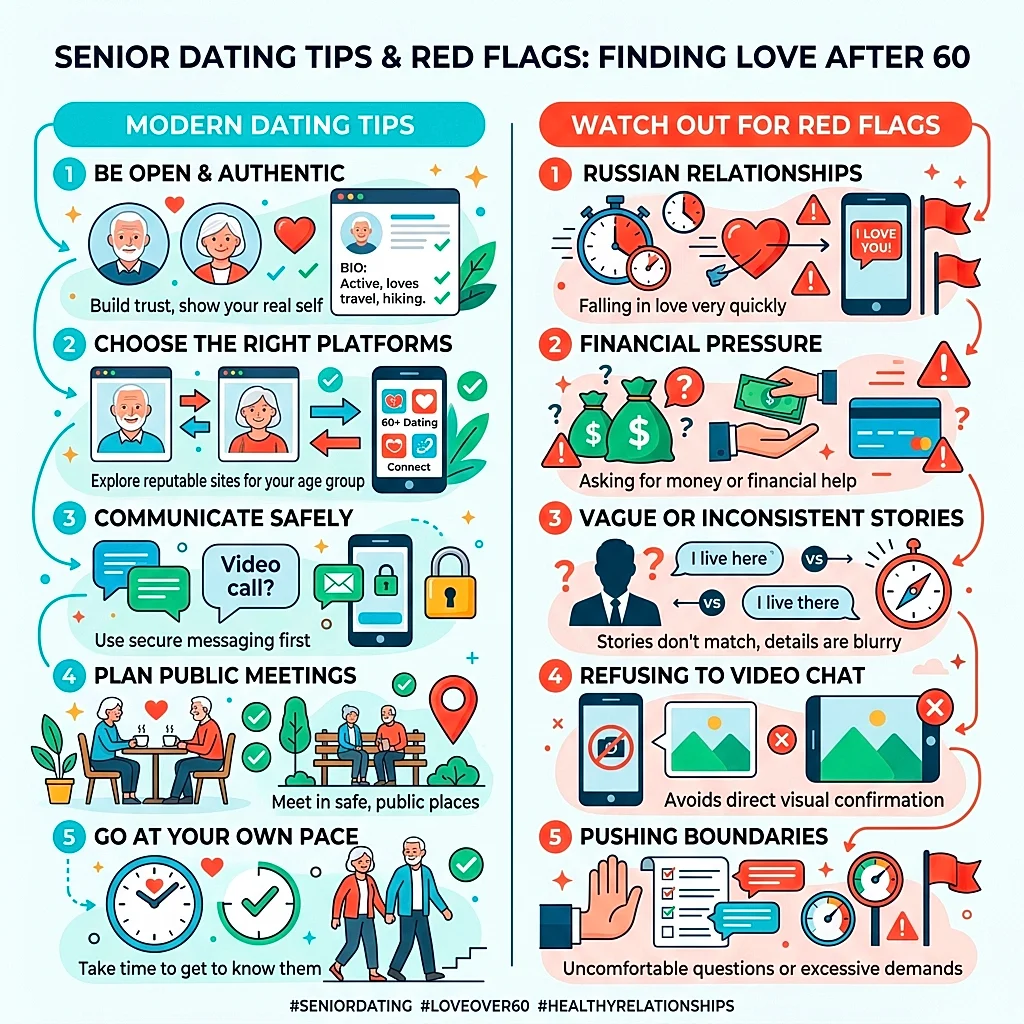
8. Red Flags That Are Unique to Senior Dating
The red flags you need to watch for at 60 are not the same ones you dealt with at 25. At this stage, you're not just protecting your heart — you're protecting your peace, your routine, and your financial security.
The Financial Mooch
There's a blunt term floating around online — "hobosexual" — for someone whose primary motivation in a relationship is finding a comfortable place to live or a funded lifestyle. It sounds harsh, but it happens. If your date constantly brings up financial struggles, hints about not being able to afford rent, or expects you to foot every bill without ever reciprocating, pay attention. A real partnership involves balance, not a one-way subsidy.
Instant Codependency
Loneliness is a real and painful issue for a lot of older adults. But if a new partner tries to monopolize every waking hour within the first few weeks — texting nonstop, getting upset when you spend an evening with friends, wanting to be joined at the hip — that's not deep love. That's codependency, and it often escalates into controlling behavior. Healthy people maintain their own friendships, hobbies, and solo time.
Shutting Down Health Conversations
Health is a practical reality of senior dating. If you ask a simple, respectful question about a visible mobility issue or their general wellness habits and they react with anger or heavy defensiveness, that tells you something important about their emotional maturity and their ability to handle life's tougher conversations.
9. Dealing with Your Adult Children
This is one of the trickiest parts of dating 60 and over, and almost nobody talks about it openly. When you were in your 20s, you needed your parents' blessing. Now, in your 60s, you might find yourself unconsciously seeking your kids' approval — and that can create all kinds of friction.
Why the Kids Push Back
It's surprisingly common for grown children to respond to a parent's new relationship with resistance, jealousy, or flat-out hostility. Usually it comes from one of two places: unresolved grief over the other parent, or protectiveness (they're scared you're going to get scammed or financially exploited).
The answer is not to hide your dating life like you're a teenager sneaking out after curfew. The answer is honest, firm communication. Something like: "I love you, and your place in my life isn't going anywhere. But I'm choosing this for my own happiness, and I need you to respect that."
Timing the Introduction
Don't rush the family introduction. Bringing a brand-new partner to Thanksgiving dinner when you've only been seeing each other for six weeks is unsettling for everyone — your kids, your grandkids, and probably your date too. The general guideline? Wait until the relationship is exclusive and rock-solid, which usually means at least six months, before doing the formal meet-the-family thing.
10. Financial Boundaries You Can't Skip
By 60, you've spent a lifetime building your financial life — paying off the house, funding retirement accounts, earmarking assets for your kids and grandkids. The financial dynamics of dating at this stage are nothing like what young couples deal with when they're starting from scratch together. Protecting what you've built isn't cold or unromantic. It's responsible.
The Pre-Nup Conversation
If your dating journey leads to a second marriage, a prenuptial agreement isn't optional — it's essential. Without one, state inheritance laws can inadvertently redirect your assets away from your children and toward your new spouse's family when you pass.
A trustworthy, honest partner won't be offended by a pre-nup request. In fact, they'll probably welcome it because it protects them too. If someone throws a tantrum over this conversation or calls you "distrustful," consider that a major red flag.
Day-to-Day Money Habits
In the everyday rhythm of dating, aim for balance. Old-school etiquette might say the man pays for everything, and that's fine for the first couple of dates. But long-term? Taking turns planning and paying for outings keeps resentment from building. And some things should be absolute: never co-sign a loan for someone you're dating, never pay off their credit card debt, and never put their name on your house deed.
$1.3 Billion
lost to romance scams in 2022 alone, with the highest median losses reported by adults over 60, per the Federal Trade Commission.
11. Having the Health Conversation
Aging is a gift, but it comes with physical realities you can't ignore. When you're dating 60 and over, you're dating bodies that have lived full, long lives. Health, mobility, and expectations around future caregiving are conversations that need to happen — and sooner than most people think.
When to Be Upfront
If you live with a chronic condition, use a mobility aid, or need specific accommodations, you don't owe that information to someone on the first date. But you also shouldn't hide it for months. That feels like a betrayal of trust when it eventually comes out.
The sweet spot is usually around the third or fourth date — once you've established a real connection, but before things get deeply emotional. Keep it straightforward: "I want to be honest with you. I have type 2 diabetes and some nerve issues in my feet, so marathon hikes aren't my thing. But I'd love to explore the botanical gardens together." No self-pity, just facts.
The Caregiver Question
A lot of independent seniors avoid dating entirely because they're terrified of ending up as someone's full-time caregiver. Maybe they already went through that with a late spouse and simply cannot do it again. That's a completely legitimate boundary.
It's okay to say, clearly and kindly, that you're looking for a partner who is independently mobile and healthy, and that you're not in a position to take on a caregiving role. This connects back to the LAT (Living Apart Together) trend we covered earlier — maintaining separate homes lets you enjoy companionship without automatically inheriting caregiving duties.
12. Professional Matchmakers vs. Dating Apps: What's Actually Worth It?
If you're serious about finding someone but exhausted by the swipe-and-scroll grind, you might be eyeing professional matchmaking services. Before you write a big check, it helps to understand what you're actually getting with each option.
The Dating App Route
Free apps are generally a frustrating experience for seniors. But paid apps — the ones charging $20 to $50 a month — are a different story. They give you access to a large pool of candidates, full control over the process, and you can browse at 2 AM in your bathrobe if you want to. The tradeoff is that you're doing all the screening yourself, which takes time and emotional energy.
🔥 Editor's Choice: The Safest Place to Meet Senior Singles
Tired of fake profiles and shady behavior on generic apps? We built LoveConnet to offer a vetted, secure environment where mature singles can find genuine connections — no games, no gimmicks.
The Professional Matchmaker Route
Services like It's Just Lunch or boutique local agencies assign you a human matchmaker who finds, screens, and schedules dates on your behalf. The upside? It's completely hands-off. You just show up at the restaurant. They handle background checks, compatibility screening, and all the awkward logistics.
The downside? Cost. Boutique matchmakers routinely charge anywhere from $5,000 to $25,000 for a six-month engagement. And their candidate pool is limited to their own database. If you live in a smaller metro area, they might run through viable matches faster than you'd like.
13. Long-Distance Dating and the "Snowbird" Factor
In your 20s, long-distance meant agonizing over who was going to relocate and upend their career. At 60+, long-distance relationships are surprisingly common — and they often work well, thanks to retirement flexibility and the "snowbird" lifestyle.
The Appeal of Dual Geographies
Plenty of active seniors spend winters in Florida or Arizona and summers in the Midwest or up north. If you match with someone who follows a similar pattern, you might spend half the year together and half the year apart — and for fiercely independent people, that's actually ideal. You get concentrated stretches of romance balanced with time to recharge, see local friends, and be present for grandkids.
When Relocation Comes Up
If your partner lives permanently in another state, the relocation conversation needs to happen before the one-year mark. Moving at 65 or 70 is a big deal. You're leaving behind your doctors, your community, your neighborhood friendships — often your family too. Don't relocate for a partner unless the relationship is legally formalized or you have the financial cushion to move back comfortably if things fall apart. Always keep a safety net.
14. Final Thoughts on Dating 60 and Over
If there's one takeaway from everything we've covered, it's this: dating 60 and over is not a race. You're not trying to beat a biological clock, and you don't owe it to anyone to settle for a partner who disrupts your peace. The whole point is joyful companionship — nothing more, nothing less.
Stepping back into the dating world takes real courage. You'll probably endure a few duds, some ghosting, and at least one story that makes your friends laugh for years. That's just the cost of admission. But the reward — finding someone to hold your hand on a Sunday afternoon walk, to laugh with over morning coffee, to travel alongside through whatever comes next — is worth every uncomfortable moment along the way.
Protect your peace. Stay sharp about scammers. And keep your heart open.
Frequently Asked Questions
Is dating harder in your 60s?
Not harder — just different. The pool of available singles might feel smaller than it did in your 20s, but the quality of connections tends to be much higher. People at this stage know what they want and don't waste time on relationships that aren't working.
What's the best dating site for seniors?
Platforms like SilverSingles, OurTime, and eHarmony consistently rank well for the 50+ crowd. Their paid subscription models filter out most of the fake profiles and low-effort users you'll find on free apps.
How can I tell if a dating profile is fake?
Classic warning signs: the photos look like they belong to a model or a stock photography site, the person claims to be working overseas (military, oil rig, international business), and they start asking for money or gift cards within the first couple of weeks. If any of those boxes check, block them and move on.
What is the "10-year rule" in senior dating?
It's an informal guideline suggesting that dating someone within roughly ten years of your own age tends to work best — you share generational touchstones and similar energy levels. That said, chemistry and compatibility matter far more than arithmetic.
Are older men intimidated by financially successful women?
Some are. But an emotionally secure man will celebrate your success, not feel threatened by it. Never dim your accomplishments or downplay your financial independence to make a date more comfortable.
How can I tell if someone is looking for a partner vs. a caregiver?
Pay attention to how they talk about their daily life. If the conversation keeps circling back to how they can't cook, their house is a mess, and their health is deteriorating, they may be looking for someone to take care of them rather than someone to share a life with. A genuine romantic partner maintains their own independence.
The LoveConnet Editorial Team
We're a team of relationship researchers, safety advocates, and dating coaches dedicated to helping mature singles navigate the modern dating landscape with confidence. Our guides are informed by real user experiences, clinical research, and interviews with relationship therapists specializing in later-life partnerships.
💬 Discussion (0)
No comments yet. Be the first to share your thoughts!