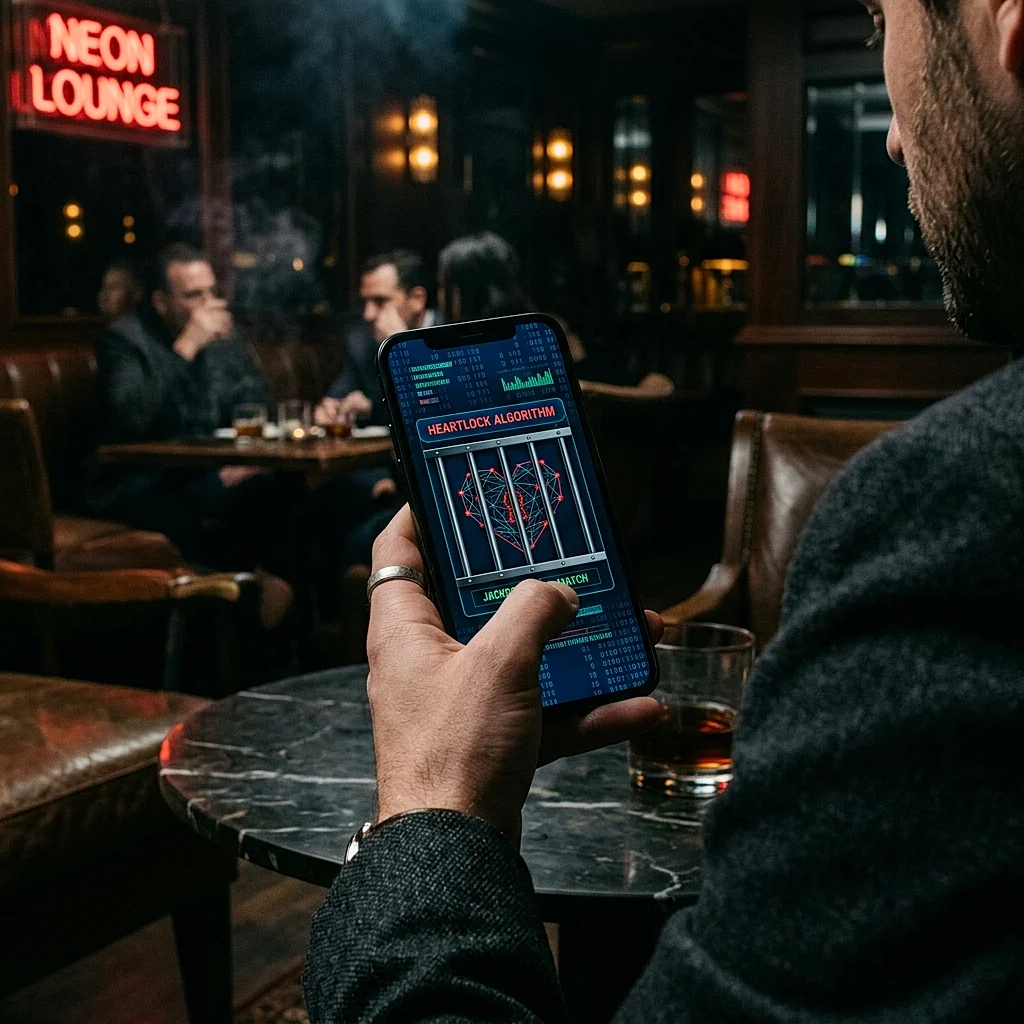
If you have spent any significant amount of time on a legacy dating app in the last few years, you have likely felt a creeping, unsettling suspicion. You swipe for hours, match with people who never reply, or reply to people who suddenly vanish. You are prompted to buy "Super Likes," "Boosts," and "Roses" just to have your profile seen by the people you actually want to date. You feel exhausted, burnt out, and profoundly alone, despite holding a digital device connecting you to millions of singles.
You probably blamed yourself. You thought your photos weren't good enough, your bio wasn't witty enough, or your standards were too high.
It is time to stop blaming yourself. The game is rigged. And it is rigged by mathematical design.
Dating apps like Tinder, Bumble, and Hinge (the latter two owned by the monolithic Match Group) are not digital matchmakers; they are publicly traded, multi-billion dollar corporations with a fiduciary duty to maximize shareholder value. To understand why modern dating feels so dystopian, you must understand the fundamental conflict of interest at the heart of the industry:
If a dating app actually worked perfectly, it would lose two paying customers forever.
The business model of legacy dating apps relies on "churn"—keeping you on the platform just happy enough not to delete the app, but frustrated enough to pay $40 a month for premium features out of sheer desperation. They have weaponized behavioral psychology, algorithmic manipulation, and the human desire for connection to create the most sophisticated, emotionally damaging casinos in history.
This is the definitive 2026 exposé on the dark psychology of dating apps. We will break down exactly how the algorithms manipulate you, why they refuse to ban catfishes, and why professional, high-earning women are punished the most by their code. Finally, we will reveal the only mathematical escape route: AI-verified, high-intent platforms like LoveConnet.
Part 1: The Neurological Hijacking (The Slot Machine Effect)
To keep you on the app, developers do not study sociology or romance; they study B.F. Skinner and behavioral psychology.
Variable Ratio Reward Schedules
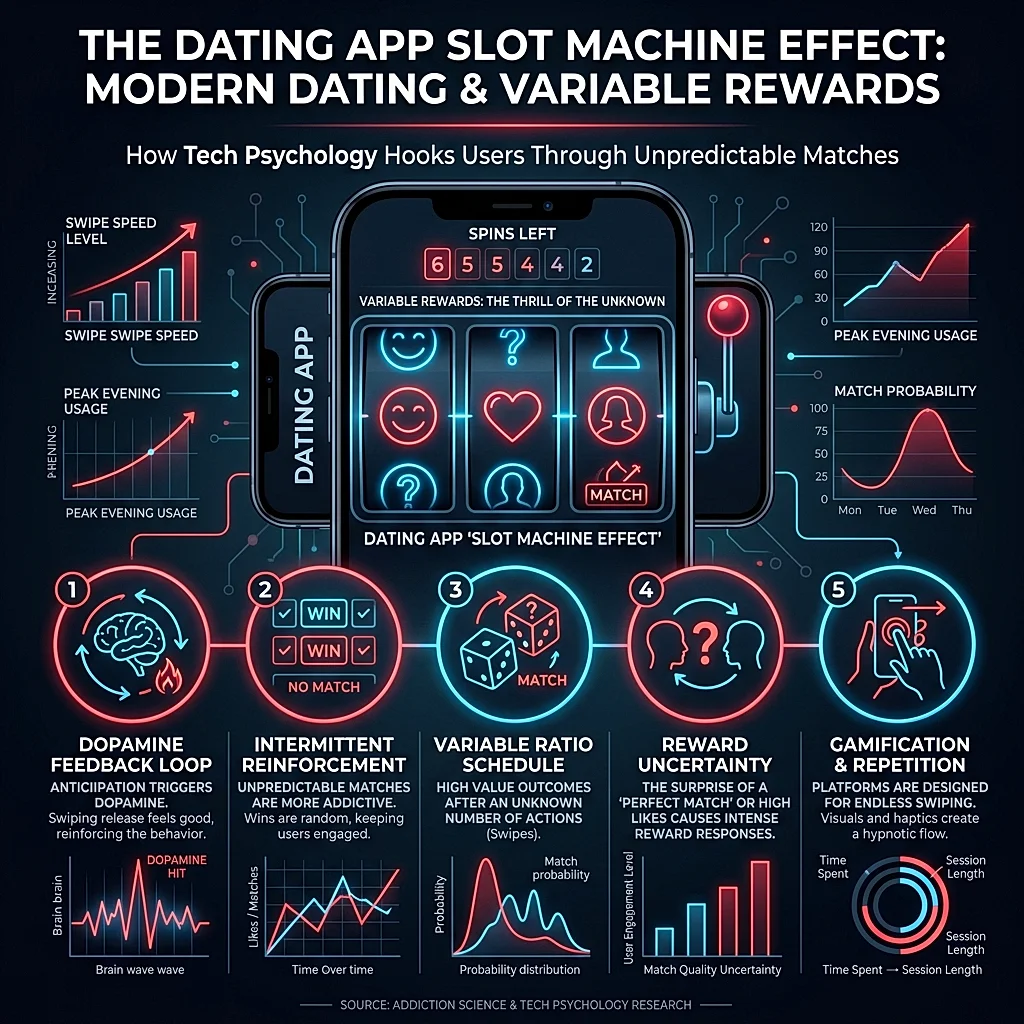
In the 1950s, psychologist B.F. Skinner discovered that the most effective way to create addictive behavior in animals (and humans) is through a "Variable Ratio Reward Schedule." If a rat pushes a lever and gets a pellet every time, it gets bored. If it pushes the lever and gets a pellet every tenth time, it gets frustrated and stops. But if the rat pushes the lever and the reward comes at random, unpredictable intervals, the rat will push the lever obsessively until it collapses from exhaustion.
This is the exact psychological mechanism behind a slot machine, and it is the exact mechanism behind the "Swipe."
When you swipe right on a dating app, you do not get a match every time. You get a match sporadically. The unpredictability triggers a massive spike of dopamine—the neurotransmitter associated with anticipation and craving, not actual pleasure. The app trains your brain to become addicted to the *anticipation* of a match, rather than the actual human connection.
The Illusion of Infinite Choice
The apps present you with an endless, bottomless stack of profiles. This triggers "The Paradox of Choice." When humans are presented with too many options, we experience cognitive paralysis. We become hyper-critical of minor flaws because we believe a "perfect" option is just one swipe away.
The apps know this. They know that by giving you infinite choice, you will never actually commit to anyone. You will go on a good first date, but when the other person sends a slightly annoying text the next day, you will instantly return to the app because the algorithm has convinced you that there are 10,000 better options waiting in your pocket.
Part 2: The "Pay-to-Play" Extortion Model
In the early 2010s, dating apps were genuinely designed to connect people. The algorithms were chronological or location-based. If someone was near you, you saw them. Today, the algorithms are highly sophisticated monetization engines designed to artificially restrict your visibility.
The "Standouts" Trap
Apps like Hinge introduced the "Standouts" feed. The algorithm identifies the most objectively attractive, highly sought-after profiles and removes them from your regular, free swiping feed. It places them behind a velvet rope.
You are allowed to look at these highly compatible people, but you cannot match with them using a standard "like." You are forced to purchase a premium digital currency (like a "Rose") just to send them a message. The app holds your most compatible matches hostage and charges a ransom.
Artificial Scarcity and "Shadowbanning"
If you do not pay for a premium subscription, the app will deliberately hide your profile from high-value users. You will be pushed to the bottom of the algorithmic deck. You will swipe for hours on inactive accounts, bots, and highly incompatible people.
When you finally break down and pay the $40/month for "Tinder Gold" or "Bumble Premium," the app will temporarily boost your profile to give you a rush of new matches. This is called a "Newbie Boost" or a "Premium Bump." However, this boost only lasts for a few days before the algorithm slowly throttles your visibility again, forcing you to buy additional "Super Boosts" on a Friday night just to be seen.
It is not a dating service; it is a digital protection racket.
Part 3: Why Legacy Apps Refuse to Ban Catfishes
One of the most frustrating aspects of modern dating apps is the sheer volume of fake profiles, romance scammers, crypto "pig butchering" syndicates, and married men hiding behind old photos.
You might ask: *Why don't these multi-billion dollar tech companies just implement mandatory identity verification to clean up the ecosystem?*
The answer is mathematically terrifying: **Because it would destroy their stock price.**
The Active User Metric
Publicly traded companies are valued based on Monthly Active Users (MAUs). A massive percentage of profiles on legacy dating apps are bots, abandoned accounts, people in relationships who log on just for ego validation, and scammers.
If Bumble or Tinder implemented mandatory AI biometric verification—forcing every single user to scan their face with their phone camera to prove they are a real, single human being—they would instantly lose anywhere from 20% to 40% of their "user base."
Wall Street would panic. The stock price would plummet. The executives would lose their bonuses.
The Ecosystem of Paranoia
Therefore, legacy apps have a massive financial incentive to keep the bots and catfishes on the platform. The fake profiles make the app look busy. When a bot swipes right on you, the app sends you a push notification: *"Someone likes you! Pay $14.99 to see who it is!"* You pay the money, reveal the profile, and realize it's a scammer trying to get you to invest in a fake crypto exchange.
The app got your money. They do not care that you were scammed.
Part 4: How the Algorithm Punishes Professional Women
If you are a successful, high-earning professional woman, the legacy dating app algorithms are specifically engineered to punish you.
The ELO Score and the "Selective Penalty"
Historically, apps like Tinder used an "ELO Score" (a rating system originally designed for chess) to rank your desirability based on how many people swiped right on you versus how many you swiped right on. While they claim to have moved past the traditional ELO score, the core mechanics remain the same: they judge you based on your swiping behavior.
Professional women have very little free time. They have high standards. They do not swipe right on every single profile. They log on, quickly assess 50 profiles, swipe left on 48 of them, and swipe right on the two men who actually meet their criteria for ambition, intelligence, and stability.
The algorithm views this highly selective behavior as "bad user engagement." It assumes that because you are swiping left so often, you are a "picky" or "uncooperative" user. As punishment, the algorithm lowers your internal score and stops showing your profile to the top-tier men. It effectively shadowbans you for having high standards.
The Intimidation Matrix
Furthermore, because legacy apps rely on volume, they cater to the lowest common denominator of male behavior. Unverified platforms attract men who view dating as a numbers game. When these men encounter a profile of a highly successful woman (a CEO, a Surgeon, a Partner at a Law Firm), their insecurities are triggered, and they swipe left.
The algorithm sees this string of left swipes from insecure men and assumes *your* profile is low quality, pushing you even further down the deck. Your professional success is actively weaponized against you by the code.
Part 5: The Bumble Backfire (The Death of the First Move)
Bumble launched with a brilliant marketing premise: A feminist app where women make the first move. In theory, this protected women from unsolicited, aggressive messages from men.
In practice, in 2026, it has caused an epidemic of burnout among successful women.
The Outsourcing of Executive Function
If you are a female executive, you spend eight to ten hours a day making decisions, leading teams, and initiating action. When you open a dating app at 8:00 PM, the absolute last thing you want to do is act as the project manager for your own romantic life.
Bumble's mechanic inadvertently trained an entire generation of men to become entirely passive. Men on the app know they don't have to do anything. They sit back, wait for the woman to initiate the conversation, wait for the woman to suggest a date, and wait for the woman to plan the logistics.
This dynamic attracts "Under-Functioners"—men who are looking for a mother or a manager, not an equal partner. The app filters *out* secure men who want to demonstrate initiative and chivalry, and filters *in* lazy men who want to be catered to.
Part 6: The Only Ethical Solution (The High-Intent Verification Model)
The era of the "swipe" is dead. The era of the gamified, unverified dating casino is over. Professional women are deleting legacy apps in droves because the ROI on their time is abysmal.
The future of dating requires a complete rejection of the volume-based model. It requires moving to a high-intent, high-security ecosystem where the platform's financial incentives are aligned with the user's romantic success.
Enter LoveConnet
LoveConnet was built specifically as a direct, aggressive countermeasure to the dark psychology of legacy dating apps. It is not an app for casual hookups, and it is not an app for people who want to endlessly scroll for dopamine hits. It is an elite, high-intent platform for professionals who are serious about finding a permanent partnership.
Mandatory AI Biometric Verification
Unlike Tinder and Bumble, LoveConnet requires 100% of its users to undergo military-grade AI facial biometric verification before they can even view another profile.
When a man creates an account on LoveConnet, the AI forces him to turn on his camera and perform a live, 3D facial scan. The AI then cross-references this biometric data with the photos he uploaded and his government ID. If there is a 1% discrepancy, the account is permanently banned.
This single feature completely destroys the dark ecosystem.
- It eliminates 100% of romance scammers from overseas.
- It eliminates 100% of the bots used to artificially inflate engagement.
- It filters out the married men hiding behind fake names and 10-year-old photos.
- Most importantly, it creates a psychological barrier to entry. If a man is willing to go through strict biometric verification to join a dating platform, he is signaling profound romantic intent. He is not there to play games.
Algorithmic Transparency
LoveConnet does not use a variable ratio reward schedule. It does not hide the best matches behind a paywall. The algorithm is designed to aggressively match you based on core values, lifestyle compatibility, and professional ambition, and then get you *off* the app and onto a real date as quickly as possible.
When an ecosystem is cleared of the noise, the bots, and the scammers, you realize that there are actually incredible, high-value men looking for love. They were just buried under the toxic sludge of legacy platforms.
Frequently Asked Questions (FAQ) - Exposing the Industry
1. Am I shadowbanned on Tinder/Bumble?
If you used to get dozens of matches and now you get zero, despite swiping regularly, you are likely shadowbanned. The algorithm has artificially restricted your visibility either to force you to buy premium features or because it deemed your highly selective swiping behavior "uncooperative."
2. Why do I only see incredibly attractive people when I first download an app?
This is the "Newbie Boost." The algorithm shows you the top 1% of profiles (who are often completely inactive or fake) to give you a dopamine rush and convince you the app is full of models. After 48 hours, they pull the rug out and show you the actual, average user base.
3. Do "Super Likes" or "Roses" actually work?
They work to get you seen, but they often backfire psychologically. Sending a paid "Super Like" can sometimes signal desperation or a lack of options, particularly to high-value users. You are paying a corporation to shout in a crowded room, but it doesn't make you more desirable.
4. Why are there so many crypto scammers on dating apps?
Because legacy apps refuse to mandate identity verification. "Pig Butchering" scams (where a scammer builds a romantic connection for months before asking the victim to invest in a fake crypto platform) are a multi-billion dollar criminal enterprise. The scammers target successful women because they have disposable income.
5. Is it my fault I can't find a good partner on these apps?
Absolutely not. You are playing a game with marked cards in a casino that controls the odds. The apps are mathematically designed to keep you single. Your failure to find love on them is a testament to their predatory design, not your worth as a partner.
6. Does deleting and remaking my Bumble account reset my algorithm?
It used to, but legacy apps now track your device ID, Apple ID/Google Play ID, and phone number. If you delete and remake your account too often, the algorithm will flag you as a spammer and permanently shadowban you upon creation.
7. Why do dating apps withhold my "Likes"?
If you get a notification that "50 people liked you!" but you swipe for hours and never match with them, the app is intentionally withholding them. They want you to pay $40 to unlock the list. Once you pay, you usually discover that those 50 people live 300 miles away or are obvious bots.
8. Is the Hinge algorithm better than Tinder's?
Hinge is owned by the Match Group (which owns Tinder). While Hinge markets itself as the app "designed to be deleted," it still relies on the exact same subscription-based, pay-to-play extortion mechanics (like locking the best matches in the "Standouts" tab).
9. Why do men ghost so much on unverified apps?
Because there is zero social accountability. When a man is hiding behind a blurry photo and a screen name, he does not view you as a human being; he views you as an avatar in a video game. Mandatory verification restores the social contract and forces people to act with basic human decency.
10. Should I pay for dating apps?
You should never pay for an unverified dating app. Paying $40 a month to access a pool of bots, scammers, and passive swipers is throwing money into a void. If you invest money, invest it in a platform like LoveConnet where the barrier to entry ensures quality.
11. Why do I feel physically exhausted after 20 minutes of swiping?
Because your brain is suffering from cognitive overload and dopamine depletion. You are processing hundreds of faces and making micro-judgments at a rapid pace without any tangible real-world reward. It is a highly unnatural psychological state.
12. What is "Dating App Burnout"?
It is a recognized psychological phenomenon characterized by emotional detachment, cynicism, and chronic fatigue resulting from the repetitive, unrewarding cycle of modern digital dating.
13. Are the success stories on Tinder real?
Yes, people occasionally win the lottery, too. A fraction of people will find genuine love on unverified apps through sheer luck, and the corporations heavily promote these anomalies in their marketing to keep the other 99% of users addicted to the slot machine.
14. Why do men swipe right on every single profile?
Because the algorithm has trained them to. The gender imbalance is so severe that many men realize their only chance of getting a match is to blindly swipe right on 100% of profiles, and then filter their matches *after* the fact. This completely ruins the ecosystem for women, who are flooded with false matches.
15. How does the gender imbalance affect my dating experience?
Most legacy apps are 70% to 80% male. This means women are completely overwhelmed with low-effort attention, while men are starved for any attention at all. This creates a toxic dynamic where men become aggressive or passive, and women become cynical and exhausted.
16. Can an algorithm actually predict romantic chemistry?
No. Algorithms can predict behavioral compatibility (values, education, lifestyle), which is essential for a foundation. But true chemistry can only be determined in person. The goal of a good dating app is to get you offline as fast as possible, not keep you texting for weeks.
17. Why is my dating app showing me people outside my age and distance filters?
Because they have run out of people in your area who meet your criteria, but they cannot show you an empty screen. If the screen is empty, you will close the app. To keep you engaged, they will ignore your strict filters and show you highly incompatible people just to keep your thumb moving.
18. What is the "Decoy Effect" in dating apps?
Apps will sometimes deliberately show you highly unattractive or incompatible profiles back-to-back, and then slip in a moderately attractive profile. The contrast manipulates your brain into thinking the moderate profile is a "great catch," tricking you into swiping right to boost engagement metrics.
19. Why does LoveConnet require a live facial scan?
Because static photos can be easily stolen from Instagram or generated by AI. A live, 3D facial scan (which is never visible to other users) proves that the person holding the phone is a living, breathing human being who matches the photos on their profile. It is the ultimate shield against deception.
20. Are men actually intimidated by successful women on apps?
Yes, but only the men you do not want to date anyway. Insecure men use dating as a way to bolster their ego. A successful woman threatens that ego. High-value, secure men are turned on by female ambition, but they are often buried by the algorithm or have left legacy apps entirely.
21. Why did the guy I matched with instantly ask for my Instagram?
He is likely a "Status Leech" or a scammer trying to move you off the platform quickly so he doesn't get banned when you inevitably report him, or he just wants to increase his follower count without ever intending to take you on a date.
22. What happens to the data I give to legacy dating apps?
It is packaged, monetized, and sold. They track how long you look at specific photos, what times of day you are most lonely, and your exact geographic location, and use this data to serve you highly targeted advertisements.
23. Is it possible for an app to hide my profile from my ex?
Many legacy apps offer a "block contacts" feature, but because they do not verify identity, your ex can easily create a fake profile with a Google Voice number and still stalk you. LoveConnet's biometric verification ensures that banned or blocked individuals cannot simply make a new account.
24. Why do I feel so anxious when using Bumble?
Because the 24-hour countdown timer is an artificial stressor designed to induce panic. It forces you to prioritize urgency over compatibility, generating a feeling of constant anxiety that you are going to "miss out" on a match if you put your phone down to focus on your real life.
25. Does Tinder purposefully keep me single?
Yes. A happily married couple does not view ads and does not pay $40 a month for Tinder Gold. Their entire corporate valuation depends on you remaining single and searching.
26. Why do men put "Not looking for anything serious" after we've been on three dates?
Because legacy apps have created a culture of infinite disposability. He likes you, but the app in his pocket is whispering that a slightly prettier, slightly younger, slightly less demanding woman is just one swipe away. He cannot commit because the casino never closes.
27. How do I know if the man I am talking to is married?
On unverified apps, you don't. Married men thrive on Tinder and Bumble because they can use fake names and photos without any oversight. On a biometrically verified platform, married men are significantly deterred because the risk of exposure and strict accountability is too high.
28. What is a "Breadcrumber"?
Someone who sends you sporadic, low-effort messages (a "like" on an Instagram story, a random "Hey" at 11 PM) just to keep you on the hook, ensuring they have access to your attention without ever committing to a real date.
29. Why do I get matches but no messages?
Because many users (particularly men) treat swiping like a video game. They swipe right on everyone to collect matches purely for an ego boost, with absolutely no intention of ever initiating a conversation.
30. Is it true that apps rank you based on your attractiveness?
Yes. They use machine learning to analyze the symmetry of your face and combine it with your swipe-right percentage to assign you a secret internal attractiveness score. They then gatekeep the ecosystem, only showing you to people within a similar score bracket, unless you pay to override it.
31. What is the difference between LoveConnet and a Matchmaker?
A traditional matchmaker costs $20,000 and has a pool of maybe 50 local clients. LoveConnet uses AI verification to provide the security and high-intent filtering of a luxury matchmaker, but with a global, algorithmically optimized pool of thousands of ambitious professionals.
32. Why do I attract men who want me to plan the dates?
If you are using Bumble, you are training them to expect you to do the work. If you are a successful woman, you naturally emit an aura of competence that attracts lazy men. You must switch to a platform that encourages traditional courtship and initiation.
33. Should I delete all my dating apps?
You should absolutely delete all unverified, legacy dating apps immediately. They are destroying your mental health and wasting your time. You should replace them with one single, high-intent, verified platform and check it only 15 minutes a day.
34. How does the LoveConnet algorithm differ from Tinder?
Tinder optimizes for time-on-screen (keeping you swiping). LoveConnet optimizes for real-world dates. By filtering out scammers and lazy users via biometric verification, the LoveConnet algorithm focuses strictly on connecting highly compatible professionals who are ready for a serious commitment.
35. Is it safe to link my Instagram to my dating profile?
On legacy apps, no. It invites stalkers and gives scammers a massive amount of personal data to use for social engineering. Keep your social media private until you have met the person in real life.
36. Why do men lie about their height so much?
Because the strict filtering mechanisms on legacy apps mean that if a man puts 5'10", he is automatically filtered out of the search results for millions of women who set the minimum to 6'0". The app's design incentivizes and rewards lying.
37. What is "Orbiting"?
When someone ghosts you (stops texting you and refuses to go on dates), but continues to view all of your Instagram stories and like your posts. It is a psychological manipulation tactic designed to keep them in your thoughts.
38. Are dating apps causing the decline in marriage rates?
They are a significant contributing factor. By turning romance into a hyper-gamified, disposable commodity, they have deeply damaged the social fabric of courtship, commitment, and compromise.
39. Why do I feel like I am settling if I date a nice guy?
Because the apps have dysregulated your dopamine receptors. You are used to the chaotic highs and lows of toxic men and the slot-machine swipe. A stable, secure, nice man feels "boring" to a dysregulated brain. You have to detox from the apps to appreciate stability.
40. Can AI actually improve dating?
Yes, but only if used defensively. Using AI to write your bio or fake your photos is terrible. Using AI biometric verification to instantly execute 100% of scammers and bots from a platform is the greatest technological advancement in modern romance.
41. How do I know if I am talking to an AI bot?
Bots reply instantly. They use slightly stilted language. They will quickly try to steer the conversation toward WhatsApp, Telegram, or crypto investments. If you use LoveConnet, you never have to ask this question, because bots cannot pass the 3D facial scan.
42. What is the "Sunk Cost Fallacy" in digital dating?
You spend three weeks texting a man. He finally asks you out. He is rude and uninteresting on the date. But because you already invested three weeks of emotional energy texting him, you agree to a second date hoping he will improve. He won't. Cut your losses early.
43. Why do dating apps make me feel ugly?
Because the algorithm intentionally throttles your visibility to make you feel desperate, so that you will open your wallet and buy a "Boost." Your lack of matches is a corporate monetization strategy, not a reflection of your physical beauty.
44. Is it a red flag if he refuses to verify his profile?
It is the ultimate red flag. If a man refuses to take a 10-second selfie to verify his identity and guarantee your safety, he is either married, a scammer, or so profoundly entitled that he does not care about your peace of mind. Block immediately.
45. How do I date offline in 2026?
Join high-end run clubs, professional networking associations, luxury gym memberships (like Equinox), and private members' clubs. However, offline dating takes immense amounts of time. The most efficient hybrid approach is offline living supplemented by one highly-vetted app like LoveConnet.
46. Why do I feel a sense of dread when I get a new match?
Because your brain has learned that a match usually leads to a dead-end conversation, ghosting, or a terrible date. The reward mechanism is broken. You need a platform where a match actually guarantees a high-quality interaction.
47. Should I put my demands in my bio?
Yes. Be incredibly polarizing. Say exactly what you want (e.g., "Looking for a secure, ambitious man for a serious relationship. I don't do situationships."). You will get 80% fewer matches, but the 20% who do match will be terrified of wasting your time.
48. Why do men swipe left on me after they see my job title?
Because your job title (CEO, Doctor, Director) requires a level of intelligence and accountability that they know they cannot provide. They are self-selecting out of your life. Be grateful to them for saving you a terrible Friday night dinner.
49. What is "Cushioning"?
When a man is in a relationship with you, but stays active on dating apps just to keep a few women "on the cushion" in case you break up. Mandatory verification and high-intent environments severely discourage this cowardly behavior.
50. What is the most powerful thing a woman can do on a dating app?
Refuse to play the game by their rules. Delete the gamified apps that disrespect your time. Move your romantic life to a secure, biometrically verified platform. Protect your peace, enforce your boundaries, and demand an equal.
Part 7: The Shadowban Deep Dive (How the Code Silences You)
One of the most insidious mechanics of modern legacy dating apps is the "Shadowban." Unlike a traditional ban where you receive a notification stating your account has been terminated, a shadowban is entirely silent. Your profile remains active on your phone, you can still swipe, and you still see ads, but your profile is completely hidden from the user ecosystem.
The "Elo" Score Fallacy
While companies like Tinder publicly state they have moved away from the chess-style Elo score ranking system, their internal patents and leaked algorithms reveal they still utilize highly complex desirability metrics. If you are a professional woman who only swipes right 2% of the time, the algorithm interprets this not as "high standards," but as "poor engagement." The app's goal is to keep users swiping; if you are not feeding the machine by matching and messaging, the machine throttles your visibility.
The Reset Penalty
Many users, frustrated by a lack of matches, attempt to "reset" their algorithmic score by deleting their account and immediately recreating it. In 2018, this worked. In 2026, it is a guaranteed shadowban. Legacy apps now track device identifiers (IMEI numbers), IP addresses, linked Apple/Google accounts, and facial recognition data from photos. If you delete and recreate your account too frequently, the system automatically flags you as a bot or spammer and permanently shadowbans your digital footprint.
Part 8: Data Monetization and The Illusion of Privacy
If you are not paying for the product, you are the product. This adage has never been truer than in the dating app industry.
The Data Broker Pipeline
When you sign up for a legacy dating app, you surrender an unprecedented amount of personal data. They track the precise GPS coordinates of where you sleep, where you work, and the exact times of day you are most active (which often correlates with moments of loneliness or emotional vulnerability). This data is aggregated, anonymized, and sold to third-party data brokers and advertising networks.
Behavioral Targeting
The apps analyze the text of your conversations. If you frequently discuss travel, you will suddenly see targeted ads for flights on your Instagram feed. If you mention feeling burnt out, you will be served ads for wellness retreats. The dating app isn't just trying to find you a partner; it is building a comprehensive psychological profile of your vulnerabilities to sell to the highest bidder.
Extended FAQ: The Dark Secrets of the Industry
51. Why do I see the same profile multiple times?
This is a known bug that companies refuse to fix because it artificially inflates the appearance of a robust user base. Often, you are seeing abandoned accounts that the app refuses to purge, or scammers who have created slight variations of the same profile.
52. Does pausing my account hurt my algorithm score?
Yes. Legacy algorithms favor daily active users. If you pause your account for a week, you will be heavily penalized upon your return, forcing you to slowly rebuild your algorithmic reputation or pay for a Boost.
53. Why are all the good profiles thousands of miles away?
To keep you engaged when your local pool dries up. Instead of telling you, "There is no one left in your area," the app will silently expand your search radius and show you highly attractive people in other cities just to keep you swiping.
54. Is there a "right time" to use dating apps?
Statistically, Sunday evenings are the highest traffic times. However, because legacy apps throttle your visibility unless you pay, logging on during peak hours without a paid "Boost" often means your profile is completely buried under thousands of paying users.
55. Why do apps push "Video Chat" so aggressively?
Because in-app video chats provide the company with immense amounts of biometric and behavioral data, and they keep you inside the app's ecosystem longer, allowing them to serve you more advertisements.
56. What happens if I reject someone the app recommends as a "Highly Compatible" match?
The algorithm penalizes you. If the AI determines a user is a perfect match and you disagree, the system assumes your filtering criteria are too rigid and will lower your internal desirability score.
57. Why do dating apps use gamified sound effects?
To trigger dopamine release. The "chime" of a match is meticulously engineered by audio psychologists to mimic the sound of a slot machine payout, ensuring your brain associates the app with addictive pleasure.
58. Do apps intentionally match me with incompatible people?
Yes, this is known as the "Decoy Strategy." By occasionally showing you profiles of people you will strongly dislike, it makes the moderately acceptable profiles seem much better by comparison, tricking your brain into swiping right.
59. How much money does the average user spend on dating apps per year?
Industry reports show that active, paying users often spend between $300 and $800 annually on subscriptions, Super Likes, and Boosts, with absolutely zero guarantee of a successful date.
60. Why is LoveConnet immune to these dark patterns?
Because LoveConnet's business model is fundamentally different. By prioritizing mandatory AI biometric verification, it actively rejects the volume-based, addictive model. It trades massive, fake user numbers for a smaller, elite, 100% verified pool of highly intentional professionals.
Part 9: The Private Equity Playbook in Dating Apps
To truly understand why the user experience on legacy dating apps has degraded so severely, you must look at the ownership structure of the companies that run them. Many of the most popular dating platforms are no longer run by idealistic founders trying to connect soulmates; they are owned by massive holding companies and private equity firms.
The "Enshittification" Cycle
Cory Doctorow coined the term "enshittification" to describe how platforms die. First, they are good to their users to build an audience. Then, they abuse their users to make things better for their business customers (advertisers). Finally, they abuse those business customers to claw back all the value for their shareholders.
Dating apps are in the final stage of this cycle. They have achieved a near-monopoly on digital dating. Because you have nowhere else to go, they no longer have to provide a good service. They can squeeze the platform for maximum revenue by throttling your matches, flooding your feed with ads, and charging exorbitant subscription fees.
The Disappearance of Customer Support
If you are harassed, scammed, or unfairly shadowbanned on a legacy app, trying to contact customer support is a nightmare. You will be met with automated bots and copy-pasted responses. Why? Because human customer support teams eat into profit margins. When a platform relies on volume rather than quality, the individual user becomes entirely disposable.
Part 10: The Decline of Modern Romance and the Path Forward
The dark psychology of dating apps has not just ruined the digital experience; it is fundamentally altering how a generation approaches romance in the real world.
The Commodification of Human Beings
When you are trained to evaluate a human being in 0.5 seconds based on a 2D photograph and a 15-word bio, you begin to view people as commodities rather than complex individuals. This translates into real-world dating behavior. People are quicker to ghost, quicker to abandon a relationship at the first sign of conflict, and less willing to compromise because they falsely believe a "flawless" replacement is waiting in their pocket.
The Resurgence of Intentionality
The only way to reverse this trend is a collective rejection of the gamified model. High-value singles are already migrating away from swipe-based casinos and moving toward high-intent ecosystems.
Platforms like LoveConnet are leading this charge by implementing strict verification and optimizing for compatibility rather than engagement time. When you remove the bots, the scammers, and the algorithmic manipulation, you are left with a smaller pool of people, but a pool where every single interaction has the potential to lead to a meaningful, real-world connection.
Extended FAQ: The Dark Secrets of the Industry (Continued)
61. Do dating apps track my physical location even when I'm not using them?
Yes. Unless you strictly limit location permissions in your phone settings to "Only While Using the App," legacy platforms continually harvest your location data to build a profile of your habits and sell it to data brokers.
62. Why do I suddenly get matches right after my subscription expires?
This is the "Re-engagement Trap." The algorithm intentionally withholds matches while your subscription is active. The moment it expires, they release those matches to send you a push notification, tricking you into resubscribing to see who liked you.
63. Can I sue a dating app if I get scammed by a fake profile?
It is incredibly difficult. Their Terms of Service explicitly state they are not responsible for the actions of their users or the veracity of the profiles on their platform, completely absolving them of the toxic ecosystem they created.
64. Is it true that apps rank me based on my race or ethnicity?
Legacy algorithms use collaborative filtering, meaning they show you profiles similar to the ones you previously swiped right on. However, this often creates a feedback loop that reinforces societal biases, artificially segregating the dating pool based on race and socioeconomic indicators.
65. Why are there so many "Instagram Models" on Tinder?
Many are legitimate accounts, but thousands are fake profiles created by marketing agencies or scammers who steal photos from lesser-known influencers to farm engagement and direct traffic to OnlyFans or scam sites.
66. How does LoveConnet prevent fake photos?
Our AI biometric scan does not just verify your face once. It maps the 3D geometry of your face upon signup. If a user later attempts to upload photos that do not match that biometric blueprint, the photos are automatically rejected.
67. What is the psychological toll of ghosting?
Ghosting activates the same neural pathways in the brain as physical pain. Legacy apps normalize ghosting by removing social accountability, contributing to a massive rise in anxiety and depression among active users.
68. Why do apps tell me I missed a match when I swipe left?
This is a manipulative tactic designed to induce FOMO (Fear Of Missing Out). They want you to regret your decision so that you will pay for a premium feature (like "Rewind") to undo your left swipe.
69. Are dating apps responsible for the loneliness epidemic?
They are a massive catalyst. By replacing organic, community-based introductions with isolated, screen-based transactions, they have stripped the human element from courtship, leaving millions feeling more isolated than ever.
70. Why is LoveConnet focused on professional women?
Because professional women are the most heavily penalized demographic on legacy apps. Their ambition is weaponized against them, and they are targeted by scammers due to their financial stability. We built a fortress to protect them.
71. Do unverified apps actually care about my safety?
No. They care about liability. They will ban a user if they are legally forced to, but they will not proactively implement AI verification because, as previously stated, it would destroy their daily active user metrics.
72. How do I break my addiction to swiping?
Delete the gamified apps immediately. Replace the habit with a high-intent app like LoveConnet, and enforce a strict rule: You are only allowed to check the app for 15 minutes a day, and you must log off as soon as you secure a date.
73. What is the future of online dating?
The future is verification and hyper-curation. The era of swiping through 10,000 strangers is ending. The next decade will be defined by highly secure, AI-vetted platforms that prioritize safety and long-term compatibility over gamification.
74. Does the algorithm know when I'm feeling vulnerable?
Yes. By tracking the times of day you log on (e.g., late at night on a weekend) and how rapidly you swipe, the algorithm can identify moments of emotional vulnerability and aggressively target you with prompts to purchase premium features.
75. How do I regain control of my romantic life?
Refuse to be a data point. Demand accountability from the platforms you use. Choose quality over quantity. And remember that your worth is not determined by an algorithm designed to keep you single.
Part 11: The Economics of Loneliness (A Market Analysis)
To fully grasp the insidious nature of legacy dating apps, we must examine them not as romantic tools, but as economic engines. The "Economics of Loneliness" is a booming sector. In 2026, the global dating app market is valued at over $12 billion. But where is this money actually coming from?
The "Whale" Phenomenon
Similar to the mobile gaming industry (which uses the exact same psychological hooks), legacy dating apps rely on "Whales." A whale is a user who is so deeply entrenched in the ecosystem, and so desperate for a connection, that they spend thousands of dollars a year on microtransactions. These users are often the most vulnerable. The apps use sophisticated data analytics to identify users experiencing emotional distress (based on frantic swiping patterns or late-night usage) and aggressively target them with "Super Boost" promotions when they are most likely to convert.
The Subscription Hierarchy
In recent years, apps have introduced increasingly expensive subscription tiers (e.g., Tinder Platinum, Bumble Premium+). These tiers, which can cost upwards of $60 to $80 a month, promise priority access and "guaranteed visibility." However, because so many desperate users upgrade to these tiers, the "priority" queue becomes just as saturated as the free queue. The user is paying a massive premium just to maintain the baseline visibility they enjoyed for free five years ago.
Part 12: Whistleblowers and the Engineering of Addiction
The transition of dating apps from genuine connection platforms to addictive casinos was not an accident. It was meticulously engineered by some of the brightest minds in Silicon Valley.
The A/B Testing of Human Emotion
Former engineers and product managers from massive tech conglomerates have increasingly stepped forward as whistleblowers, detailing the aggressive A/B testing used on users. Every button color, every notification sound, and the exact timing of match reveals are tested relentlessly to see which variation maximizes screen time and revenue. If a specific interface change causes users to go on more successful real-world dates but spend less time on the app, that change is immediately rolled back. The metric of success for a product manager at a legacy app is "Daily Active Users," not "Marriages."
The "Desperation Metric"
Leaked internal documents have suggested that some algorithms actively track what developers call "Desperation Metrics." If a user suddenly lowers their age filters, increases their distance filters to the maximum, and begins swiping right 100% of the time, the algorithm recognizes that the user's standards have collapsed due to loneliness. Instead of rewarding this behavior with matches, predatory algorithms will often restrict visibility further, knowing the user is now primed to purchase premium features out of sheer desperation.
Part 13: The Generational Trauma of Swiping
We are now seeing the long-term psychological effects of a decade dominated by swipe culture. An entire generation of adults has been conditioned to view romantic partners as disposable, interchangeable commodities.
The Erosion of Conflict Resolution
Because the illusion of infinite choice is so pervasive, the threshold for abandoning a relationship has plummeted. If a partner exhibits a minor flaw, or if a disagreement occurs, the immediate physiological response for many users is to redownload Tinder. Why do the hard work of communication and compromise when a supposedly "flawless" replacement is just three swipes away? This has led to a generation terrified of commitment and entirely lacking the skills necessary for long-term conflict resolution.
The Gamification of Rejection
Rejection is a normal part of dating, but legacy apps have gamified and multiplied it to an unnatural degree. Getting rejected by one person in a bar stings; getting silently rejected by 500 people in a week on an app causes profound psychological damage. The human brain was not evolved to process social rejection on an industrial scale. This constant, low-level trauma leads directly to Dating App Burnout, cynicism, and eventually, total withdrawal from the romantic market.
Extended FAQ: Deepening the Investigation (Questions 76-100)
76. Do legacy apps use fake profiles generated by AI?
While the platforms themselves usually deny creating fake profiles to simulate engagement, they have been historically slow to ban third-party bot farms because these fake accounts inflate their daily active user metrics. With the rise of generative AI, the problem has multiplied tenfold.
77. What is "Catfishing 2.0"?
Catfishing 2.0 involves using deepfake technology and AI-generated voice notes to create incredibly convincing fake personas. Without mandatory live 3D biometric scanning (like LoveConnet uses), it is nearly impossible for a legacy app to catch a sophisticated Catfish 2.0.
78. Why do apps prompt me to "Verify my profile" if they don't actually enforce it?
Legacy apps use voluntary verification as a marketing gimmick to provide the *illusion* of safety. However, they refuse to make it mandatory because they know a massive portion of their user base (bots, scammers, married people) would be immediately banned.
79. Can my boss see my dating profile?
On unverified, volume-based apps, yes. Anyone within your radius can see you. LoveConnet offers strict "Incognito" modes for high-profile executives, ensuring your profile is only visible to the people you explicitly choose to engage with.
80. Why do I get a match notification, but when I open the app, it's gone?
This usually happens because a bot swiped right on you, triggered the notification, and was then deleted by a delayed automated sweep before you opened the app. It's a hallmark of a poorly moderated platform.
81. Do dating apps monitor my messages for keywords?
Yes. They use automated systems to scan for illegal activity, but they also scan for keywords related to moving off the platform (e.g., "WhatsApp," "Instagram," "phone number"). If you try to move the conversation offline too quickly, the algorithm may flag you as a spammer.
82. What is "Zombieing"?
When someone ghosts you, completely disappears for months, and then suddenly "rises from the dead" by sending a casual text or liking an old photo as if nothing happened. It is highly manipulative and common among users addicted to the validation of dating apps.
83. Why do men complain about dating apps as much as women?
The ecosystem is toxic for everyone. Women are overwhelmed by the sheer volume of low-effort, aggressive, or inappropriate attention. Men, due to the severe gender imbalance, are starved for any attention at all, leading to depression and the "mass right-swipe" strategy.
84. Can an algorithm be inherently sexist?
Yes. Algorithms are written by humans and trained on human behavior. If an algorithm is trained on data showing that men generally swipe left on women who make significantly more money than them, the algorithm will "learn" that successful women are less desirable and will begin hiding their profiles.
85. Why do apps offer "Premium" features for free when I try to delete my account?
This is a classic retention strategy. The moment you initiate the deletion process, the app realizes it is about to lose a data point. It will suddenly offer you a free month of Premium or a free Super Boost to hook you back into the slot machine cycle.
86. Is it true that apps rank profiles based on the "attractiveness" of the people you message?
Yes. This is called collaborative filtering. If you consistently send messages to users with a very high internal desirability score (the top 5%), and they consistently ignore you, your own score will plummet because the algorithm deems you to be "reaching out of your league."
87. What is the psychological effect of the "Read Receipt"?
Paid features that allow you to see if someone read your message are designed to induce anxiety. Knowing someone read your message and deliberately chose not to reply triggers a much harsher rejection response than simply assuming they haven't seen it yet.
88. Why do dating apps limit how many people I can swipe right on for free?
To create artificial scarcity. By putting a hard limit on your daily swipes, they force you to value the swipes more, making the psychological "reward" of a match feel earned. It also provides a hard paywall for users who want to swipe infinitely.
89. Do apps know if I take a screenshot of someone's profile?
Most major apps do not currently notify the other user if you take a screenshot of their profile, but the app's internal analytics definitely track that you took the screenshot, using that data to measure your level of interest in that specific profile type.
90. Why is LoveConnet's user base smaller than Tinder's?
Because LoveConnet prioritizes extreme quality over meaningless volume. When you subtract the 40% of fake accounts, bots, and scammers, and then filter out the users who refuse to verify their identity, you are left with a highly concentrated pool of serious, high-value professionals. A smaller, verified pool is vastly superior to a massive, polluted ocean.
91. How does the "Echo Chamber" effect work on dating apps?
Algorithms show you what they think you want to see. If you swipe right on three blonde men who work in finance, the app will flood your feed with blonde men in finance, completely hiding millions of other potentially compatible partners and creating a romantic echo chamber.
92. Why do I feel like I'm performing at a job interview on dates?
Because the transactional nature of the apps translates to the date itself. Both parties are acutely aware that they have 10 other matches waiting on their phone. This pressure to impress quickly turns a romantic encounter into a high-stakes, ruthless job interview.
93. Can I get un-shadowbanned?
It is notoriously difficult. Some users report that purchasing a premium subscription temporarily lifts a shadowban (because the app wants your money), but the throttling usually resumes once you stop paying. The best solution is to abandon the platform entirely.
94. Why do unverified apps feel so hostile?
Anonymity breeds hostility. When users feel they are protected by a digital veil, they engage in behavior they would never attempt in real life—sending unsolicited explicit photos, utilizing hate speech, and aggressively harassing other users. Verification instantly cures this.
95. What is "Fleece-ware" in the context of dating apps?
These are predatory apps that technically function, but exist solely to trick users into agreeing to exorbitant, hidden subscription fees (sometimes up to $100 a week) hidden in confusing Terms of Service agreements.
96. How do I date offline without apps in 2026?
You must be highly intentional. Join luxury fitness clubs, attend industry-specific networking galas, and utilize high-end matchmaking services. However, the most effective modern strategy is a hybrid: maintaining a vibrant offline social life while using one strictly vetted, AI-verified platform like LoveConnet to widen your net safely.
97. Why do dating app CEOs say their goal is to get you off the app?
It is purely a marketing slogan. No CEO of a publicly traded tech company wants you to stop using their product. They say it because it sounds romantic, but their quarterly earnings reports tell the true story: they need you swiping daily.
98. Is it a red flag if he has been on Tinder for 5 years?
Usually, yes. It indicates a profound fear of commitment and a deep addiction to the validation of the swipe. Men who are serious about finding a partner do not linger on volume-based apps for half a decade.
99. How does LoveConnet protect my privacy?
LoveConnet uses end-to-end encryption and military-grade data protection. More importantly, we do not sell your behavioral data to third-party ad networks. Our revenue comes from providing a premium, secure matchmaking service, not from monetizing your emotional vulnerabilities.
100. What is the ultimate takeaway from this exposé?
That your struggles with modern dating are not a reflection of your worth. You have been placed in a digital maze designed by behavioral psychologists to keep you lost. The only way to win the game is to stop playing it on their terms. Demand verification. Demand high intent. Switch to a platform that respects you.
Part 14: The Algorithm's Legal Loopholes
You might wonder how legacy dating apps get away with these deceptive practices. The answer lies in the intentionally vague language of their Terms of Service (ToS). When you create an account, you sign away almost all of your digital rights.
The Right to Throttle
Dating apps include clauses in their ToS that explicitly state they do not guarantee you will be seen by any specific number of users, nor do they guarantee the quality of the profiles you are shown. This gives them the legal cover to throttle your profile, hide your matches, and artificially suppress your visibility without facing class-action lawsuits for fraud. They are selling "access" to a platform, not "results," which allows them to manipulate the algorithmic presentation of that platform entirely in their favor.
Mandatory Arbitration
Almost all legacy dating apps require users to agree to mandatory arbitration clauses. This means if you are scammed by a fake profile that the app refused to ban, or if you discover your data was sold illegally, you cannot sue them in a public court of law. You are forced into a private arbitration process paid for by the corporation, where the odds are overwhelmingly stacked against the consumer. It is a legal shield for algorithmic abuse.
The Final Investigation: FAQ 101 to 125
101. Does updating my bio reset my Elo score?
No, it does not. Updating your bio or adding a new photo might give you a microscopic, temporary boost because the algorithm wants to see how other users react to your new data, but your foundational desirability score remains anchored to your long-term swiping history.
102. Why do dating apps crash or freeze so often?
Often, these are not actual crashes. Sometimes the app intentionally introduces "loading friction" (a spinning wheel) to make the user think the app is working hard to find a match, which heightens the anticipation. Other times, it is just bloated code from too many integrated ad trackers.
103. Is "Tinder Gold" or "Bumble Premium" worth it?
From a mathematical standpoint, no. You are paying a premium to remove the artificial roadblocks that the company intentionally placed in your way. You are not buying a better dating pool; you are paying a ransom to access the basic functionality of the app.
104. How do fake profiles pass photo verification?
Legacy apps often use static photo verification (asking you to copy a pose). Scammers bypass this easily by either finding the corresponding pose from the stolen Instagram account they are mirroring, or by using basic deepfake software to map the pose onto a stolen face.
105. Why do apps ask me to rate my date after we meet?
They claim this is for safety, but it is primarily to train their machine learning models. They want to know which algorithmic pairings resulted in a successful offline interaction so they can refine their predictive models and keep you engaged on the app longer.
106. Can dating apps read my texts or listen to my phone calls?
No, iOS and Android sandboxing prevents them from reading your iMessages or listening to your calls. However, they absolutely read every single message you send within their app, analyzing the sentiment and syntax to profile your emotional state.
107. What happens if I swipe left on someone who Super Liked me?
The algorithm registers this as a strong negative signal against the person who sent the Super Like. If a user consistently sends paid Super Likes and gets rejected by high-value users, the algorithm assumes they are spamming and drops their score further.
108. Why do I see my Facebook friends on Tinder even if I disabled the integration?
Because legacy apps buy data from third-party brokers who map out the social graph. Even if you disconnect Facebook, the app can often deduce your social circle based on your phone contacts and location data, leading to awkward encounters.
109. Does the algorithm know how much money I make?
Indirectly, yes. They extrapolate your income based on the zip code of your GPS coordinates, the model of phone you are using (a brand new iPhone Pro vs. a five-year-old Android), your listed job title, and the educational institutions in your bio. They use this data to determine how much you are willing to spend on subscriptions.
110. Why is LoveConnet focused on "High Intent"?
Because "High Intent" solves 90% of modern dating problems. When you only interact with people who have paid a premium and verified their biometric identity, you completely eliminate the tourists, the ego-swipers, and the scammers. You are left only with people who are serious about finding a partner.
111. What is the "Fresh Meat" phenomenon?
When a new user joins a legacy app, they are given an intense algorithmic boost for the first 48 hours. They receive hundreds of matches and messages. The app is intentionally overwhelming them with dopamine to ensure they get addicted to the platform immediately.
112. Why do some profiles have only one photo?
They are almost always bots or married individuals trying to minimize their digital footprint. A legitimate user who is serious about dating will always fill out their profile completely. Never swipe right on a single-photo profile.
113. Can the app algorithm detect if I am feeling depressed?
By analyzing your behavioral metadata—such as an increase in late-night swiping, longer session durations without messaging, and a decrease in response rates—the algorithm can accurately infer a depressive or lonely state, which triggers aggressive monetization prompts.
114. Why do matches unmatch me immediately after I message them?
This is usually a bot that was flagged by the system and banned right after you matched. Alternatively, it is a user who treats swiping as a game and unmatched you simply to clear out their inbox.
115. Is it a good idea to put my height in my bio if I am short?
Yes. Honesty is the ultimate filter. Lying about your height on a dating app guarantees a terrible first date because the other person will immediately realize you are deceptive. Filter out the people who care about height before you waste money on dinner.
116. How does LoveConnet's algorithm differ from Bumble's?
Bumble's algorithm relies on volume and the forced "women make the first move" mechanic, which leads to burnout. LoveConnet's algorithm focuses strictly on deep psychological compatibility, career alignment, and verified intent, eliminating the need for endless swiping.
117. Why do dating apps use gamified mechanics like "Swipe Surge"?
To create a false sense of urgency. By sending a push notification saying "Swipe Surge in your area!", they manipulate thousands of users into logging on simultaneously, creating an artificial spike in engagement that looks great on their daily metric reports.
118. Are the "Top Picks" curated by a human?
Absolutely not. They are curated by an algorithm that identifies the profiles with the highest swipe-right ratios in your geographic area. The app then locks these highly desirable profiles behind a paywall to extort money from you.
119. What is "Simping" and how does the algorithm exploit it?
Simping refers to individuals who offer excessive attention or financial support to someone who shows no romantic interest. Legacy apps exploit this by allowing users to buy digital "gifts" or "priority messages" for highly attractive users, effectively monetizing parasocial desperation.
120. Why do people list their zodiac signs on dating apps?
It provides a low-stakes conversational icebreaker. While scientifically meaningless, apps encourage users to add zodiac signs because it increases the completion rate of profiles and gives users an easy topic to message about, which boosts engagement metrics.
121. Can I delete my data from a dating app?
In theory, yes, if you live in a region with strict data privacy laws (like the GDPR in Europe or the CCPA in California). In practice, dating apps make the data deletion process incredibly convoluted, and they often retain anonymized versions of your data indefinitely.
122. Why do men complain that they get zero matches?
Because the math is fundamentally against them. In an ecosystem that is 75% male, and where women only swipe right on the top 10% of profiles, the bottom 90% of men are mathematically destined to remain invisible, no matter how much they pay for a Boost.
123. What happens if I report a profile for bad behavior?
On a legacy app, your report usually goes into an automated queue. Unless the user receives dozens of reports in a short timeframe, the app rarely takes action. On LoveConnet, reports are taken incredibly seriously because maintaining an elite, safe ecosystem is the core of the business model.
124. Is it possible to find true love on a legacy dating app?
Yes, just as it is possible to win the jackpot on a slot machine. The system occasionally produces a winner to keep the other players addicted, but the vast majority of users will simply lose their time, money, and emotional energy.
125. What is the single biggest red flag on a dating app profile?
A refusal to verify. In 2026, when deepfakes and romance scams are rampant, refusing to verify your identity is an explicit statement that you are hiding something. Never engage with an unverified profile.
Conclusion: Opt Out of the Casino
The dating app industry has spent the last decade convincing you that love is a numbers game. They told you that if you just swiped a little more, paid a little more, and lowered your standards a little more, you would eventually find happiness.
It was a lie. They built a casino, and in a casino, the house always wins.
As a successful, intelligent professional, you do not tolerate scams in your financial life, and you do not tolerate incompetence in your professional life. It is time to stop tolerating psychological manipulation in your romantic life.
You have the power to opt out. You have the power to demand verification, transparency, and high-intent matching.
LoveConnet is not a game. It is a highly secure, biometrically verified ecosystem built exclusively for ambitious professionals who are ready to find their equal. It is the only platform that uses AI to protect you, rather than exploit you.
Delete the casino. Step into the future of secure dating.



💬 Discussion (0)
No comments yet. Be the first to share your thoughts!