
- Christian Dating is a modern process of exploring romantic compatibility with the explicit goal of discerning marriage, differing fundamentally from secular dating which often prioritizes recreational romance.
- The Bible does not provide a specific dating manual. Because modern dating did not exist in the ancient Near East, Christians must apply overarching biblical principles of purity, wisdom, and community to their romantic lives.
- Boundaries are essential. Because the cultural default is physical and emotional immediate gratification, Christian singles must proactively establish spiritual, physical, and emotional boundaries to protect their hearts and honor God.
- Intentionality over Isolation: The most successful Christian relationships are built within the context of a healthy church community, rather than in isolated, secretive environments.
What Is Christian Dating?
If you have ever felt overwhelmed by the unwritten "rules" of Christian dating, you are not alone. You might have grown up hearing that you should "kiss dating goodbye," or conversely, you might have been told that you just need to "put yourself out there."
To cut through the confusion, we need a clear definition. Christian dating is the intentional process where two believers spend time together to determine if they are spiritually, emotionally, and practically compatible for a lifelong marriage covenant.
Unlike secular dating, which is often viewed as a recreational activity meant for casual fun, self-discovery, or physical gratification, Christian dating has a singular finish line: marriage. If it becomes clear that a marriage would not honor God or be a healthy fit, the Christian dating process dictates that the relationship should end to prevent unnecessary emotional entanglement.
What Is Christian Courtship?
To understand where many modern Christian dating "rules" come from, we must look at the history of the courtship movement. In the late 1990s and early 2000s, a massive cultural shift occurred within evangelical Christianity. Pushing back against the high divorce rates and hyper-sexualized culture of secular dating, Christian leaders began advocating for "courtship."
Courtship is a highly structured, community-driven approach to romance. In a strict courtship, a man does not simply ask a woman out on a date. He must first seek permission from her father or a spiritual mentor. If granted, the couple spends time together almost exclusively in group settings or with their families. The goal is to evaluate marriage readiness under the protective, watchful eye of the community, eliminating the isolation where physical temptation thrives.
The Rise and Fall of Strict Courtship
While the intentions behind the courtship movement were noble—protecting purity and fostering intentionality—the strict application often caused severe unintended consequences. By the 2020s, many leaders of the movement apologized for the damage it caused.
Critics point out that extreme courtship models often fostered legalism, suppressed healthy emotional development, and created an environment where singles felt terrified to even speak to the opposite sex. Today, the pendulum has settled in the middle. Most modern Christians practice a "blended" approach: they date, but they do so with the high intentionality and community involvement that courtship championed.
Courtship vs. Dating: A Comparison
If you are navigating the modern dating world, understanding the differences between these two philosophies can help you set your own boundaries.
| Feature | Modern Christian Dating | Traditional Courtship |
|---|---|---|
| Initiation | Directly asking the person out (often via apps or in person). | Asking a father or mentor for permission to pursue. |
| Setting | One-on-one dates (coffee, dinner), highly individualized. | Group settings, family dinners, high community oversight. |
| Pacing | Exploratory. Marriage is the ultimate goal, but not assumed immediately. | Highly intentional. Marriage is assumed as the explicit outcome unless proven otherwise. |
| Accountability | Voluntary. The couple must proactively seek mentorship. | Mandatory. Mentorship is built into the structure of the relationship. |
Why You Need a Rulebook in 2026
If you are using a Christian dating app or meeting singles at a young adults ministry, you cannot rely on cultural defaults. The cultural default is to date for three years, move in together to "test the waters," and eventually decide on marriage. This directly contradicts biblical wisdom.
Because the Bible doesn't explicitly outline a step-by-step dating manual (arranged marriages were the norm for Abraham, Isaac, and Jacob), you must be proactive. You must build a framework of spiritual, physical, and emotional boundaries that protect your heart and honor God. In the following sections, we will break down exactly how to establish those boundaries in the modern era.
Spiritual Boundaries: Protecting Your Core Identity
When most people hear the word "boundaries" in the context of Christian dating, they immediately think of physical purity. While physical boundaries are crucial (and we will cover them extensively), the most foundational boundary you must set is spiritual.
A spiritual boundary determines who you allow to influence your walk with God. If you fail to set spiritual boundaries, no amount of physical purity will save a relationship from ending in profound heartache.
What Does It Mean to Be Unequally Yoked?
The single most important spiritual rule in Christian dating comes from 2 Corinthians 6:14: "Do not be unequally yoked with unbelievers."
To be unequally yoked means to enter into a binding, cooperative relationship—like marriage—with someone who does not share your fundamental faith in Christ. The metaphor comes from agriculture, where two animals (like an ox and a donkey) of different sizes and strengths are strapped into a wooden yoke to pull a plow. Because their underlying nature and strength are different, they will inevitably pull in opposite directions, causing the yoke to chafe and the plow to fail.
In modern dating, this means that if your foundational worldview, your ultimate authority (Scripture), and your primary life goal (glorifying God) are not shared with your partner, your marriage will inevitably fracture under the weight of major life decisions.
Can Two Christians Be Unequally Yoked?
This is where the boundary gets highly practical. The strictest interpretation of the text refers to a Christian marrying a non-Christian. However, in modern dating, you must be hyper-aware of a spiritual mismatch.
Just because someone checks the "Christian" box on a dating app does not mean you are equally yoked. If you are deeply committed to your local church, actively reading Scripture, and striving for holiness, and you date someone who views church as a "twice a year" obligation and holds a highly secular worldview, you are functionally unequally yoked.
Your spiritual boundary must dictate that you only date someone whose trajectory of faith matches or exceeds your own. A man who cannot lead himself spiritually cannot lead a family spiritually.
Real-World Example: Navigating Theological Differences
Consider a scenario where Jessica, a devout Evangelical, begins dating David. David identifies as a Christian, but his theology is highly progressive, and he rejects the authority of the Bible on several key moral issues. They agree to disagree and eventually get married.
Five years later, they are tasked with raising a child. Jessica wants to teach the child that the Bible is the ultimate source of truth. David wants to teach the child that the Bible is just a collection of helpful, ancient literature, and that truth is subjective. They are now paralyzed. Because they did not establish strict spiritual boundaries while dating, their children are now caught in the crossfire of an unequal yoke.
What Is Missionary Dating?
One of the most dangerous rationalizations in Christian dating is the concept of missionary dating.
Missionary dating is the practice of a Christian dating a non-believer with the explicit or underlying hope of converting them to the faith. It often starts innocently: you meet someone charming, kind, and respectful of your faith, and you think, "If I just show them the love of Christ, they will eventually give their life to Him."
Why Pastors Warn Against It
Every orthodox pastor and theologian strongly advises against missionary dating for two critical reasons:
- It creates a manipulative dynamic. A romantic relationship requires mutual submission and partnership. Evangelism is a ministry. When you mix the two, the non-believer often feels pressured to convert just to maintain the relationship, leading to false conversions based on romance rather than repentance.
- It compromises the believer. The statistical reality is that the Christian is far more likely to compromise their own faith and convictions to save the relationship than the non-believer is to convert. You cannot pull someone up to your spiritual level while they are actively holding you down.
How to Vet Someone’s Faith Early
To maintain your spiritual boundaries, you must learn to vet a potential partner’s faith early in the dating process, without treating a coffee date like a theological interrogation.
Here are practical questions to ask on the first few dates that reveal spiritual depth rather than just religious affiliation:
- "What is God teaching you right now in this season of your life?" (A spiritually vibrant person will have a ready answer. A nominal Christian will stumble.)
- "What does your church community look like?" (This reveals if they value accountability or if they are a 'lone ranger' Christian.)
- "How has your faith shaped your career or your view of money?" (This moves the conversation from abstract theology to practical application.)
If you are using a platform like LoveConnet, you can do much of this vetting before ever meeting in person by utilizing deep theological filters and engaging in intentional messaging.
Physical & Emotional Boundaries
Once spiritual boundaries are established, a couple must navigate the tension of physical and emotional intimacy. In a secular dating context, physical intimacy is often used as a tool to determine compatibility. In Christian dating, physical intimacy is reserved exclusively for the covenant of marriage.
What Is Purity Culture?
To understand the modern Christian dialogue around physical boundaries, we must address Purity Culture. Peaking in the 2000s, this evangelical movement heavily emphasized virginity, modest dress, and strict behavioral codes (often symbolized by "purity rings").
While the goal was biblical holiness, the methodology was often deeply flawed. Purity culture frequently taught that virginity was a physical state that could be "lost" or "stolen," rather than a posture of holiness before God. It often placed the burden of male purity entirely on how women dressed, and it taught that following the rules would guarantee a perfect, problem-free marriage—a promise the Bible never makes.
Today, establishing physical boundaries is less about fear and legalism, and more about honoring the sacredness of the marriage bed and protecting one another from temptation.
Setting Physical Boundaries: How Far Is Too Far?
The Bible is explicitly clear that sex outside of marriage (fornication) is a sin (1 Corinthians 6:18). However, it does not provide a specific checklist regarding holding hands, kissing, or cuddling.
Because there is no explicit verse stating "Thou shalt not kiss before the altar," couples must apply the principle of wisdom. The purpose of a physical boundary is not to get as close to the line of sin as possible without crossing it; the purpose is to protect the emotional clarity of the relationship.
Here are practical guidelines for setting physical boundaries in 2026:
- The "Public" Rule: A healthy baseline for physical affection while dating is to only do things you would feel comfortable doing in front of your grandparents or your pastor.
- Discuss Boundaries Early (But Not Awkwardly): You do not need to outline your physical boundaries on the first date. However, once the relationship becomes exclusive, it is the man's responsibility to initiate a conversation about honoring God with your bodies, ensuring both partners agree on the limits.
- Avoid Isolation: Temptation thrives in isolation. If you struggle with physical boundaries, stop watching movies alone on the couch at midnight. Move your dates to public spaces or group settings.
What Is Emotional Purity?
While physical purity is heavily discussed, emotional purity is often completely ignored, leading to massive heartbreak.
Emotional purity refers to protecting your heart (and the heart of your partner) from premature intimacy. Proverbs 4:23 commands believers to "Keep your heart with all vigilance, for from it flow the springs of life."
In the digital age, it is incredibly easy to build a false sense of intimacy before a commitment is ever made. You can text someone for six hours a day, share your deepest childhood traumas, and talk about your future children, all before you have even defined the relationship.
The Danger of "Trauma-Dumping"
A common violation of emotional purity is trauma-dumping. This occurs when two people mistake vulnerability for true connection. On a second date, one person shares their deepest, most painful secrets or struggles with sin. The other person steps in to act as a savior or a therapist.
This creates a hyper-accelerated emotional bond that is not supported by the actual, practical foundation of the relationship. When the relationship inevitably faces real-world conflict, that false intimacy collapses. To maintain emotional purity, vulnerability should be scaled to the level of commitment. Do not give a stranger the emotional access that belongs to a spouse.
Navigating Modern Tools: Apps and Intentionality
Historically, Christians met their spouses through their local church, their university, or their immediate friend group. Today, nearly 40% of all marriages begin online. While the tools have changed, the biblical rules of engagement remain the same.
What Is Intentional Dating?
In the context of dating apps, intentional dating is the active rejection of the "swipe culture" that dominates secular platforms like Tinder or Bumble. Intentional dating means treating every profile as a human being made in the image of God, rather than a commodity to be discarded if they aren't physically perfect.
To date intentionally, you must establish strict rules for your app usage:
- Stop Casual Swiping: Do not open a dating app just because you are bored. Treat it like a tool with a specific purpose. When you match with someone, read their bio thoroughly and ask intentional questions about their faith.
- Move Off the App (Safely): Do not let a conversation linger in the text phase for a month. The goal of an app is to facilitate an in-person meeting. If they refuse to jump on a quick phone call or video chat within the first week, move on.
- Choose the Right Platform: You cannot date intentionally if the platform is fundamentally broken. Legacy sites often charge $50 a month just to send a message, while modern swipe apps are flooded with bots. Platforms like LoveConnet are specifically built for intentionality, offering free messaging and strict AI face verification to block scammers.
The 5 Biggest Red Flags in Christian Dating
When vetting a potential spouse, you must look beyond their ability to quote Scripture. The Pharisees knew Scripture better than anyone, yet their hearts were far from God. Here are the five biggest red flags to watch for in the early stages of Christian dating:
1. Spiritual Gaslighting
When you attempt to set a boundary—whether physical or emotional—and they respond by making you feel like a legalistic prude, you are experiencing spiritual gaslighting. For example, if you say, "I don't think we should spend the night alone in your apartment," and they reply, "God knows my heart, why are you being so judgmental?", that is a massive red flag. A Godly partner will respect and protect your boundaries, even if they disagree with the strictness.
2. The "Lone Ranger" Christian
They claim to have a deep, personal relationship with Jesus, but they refuse to submit to the authority of a local church. They hop from church to church, or they claim they "find God in nature" instead of in a congregation. A refusal to commit to a church community almost always translates to an inability to commit to a marital covenant.
3. Extreme Purity Culture Baggage
While valuing purity is biblical, carrying extreme legalism into the relationship is dangerous. If they view the opposite sex entirely through a lens of fear and lust, or if they believe that a perfectly pure dating relationship guarantees a conflict-free marriage, they are setting the relationship up for failure.
4. Unequal Effort in Pursuit
If you are the one constantly initiating text messages, planning the dates, and driving the spiritual conversations, the relationship is fundamentally unbalanced. In a healthy dynamic (especially in traditional complementarian theology), the man should take the lead in initiating and defining the relationship, while the woman should be clear and responsive.
5. Isolation from Friends and Family
If they constantly want to spend time with you alone and seem annoyed when you suggest hanging out with your friends or small group, they are isolating you. Isolation is the first tool of an emotional abuser. A healthy relationship seamlessly integrates into your existing community.
Real-World Example: Identifying a Toxic Trait
Imagine you go on a date with a man you met at a Christian conference. He is charming and clearly passionate about theology. However, over dinner, he spends thirty minutes aggressively criticizing the pastoral leadership of his last three churches, claiming they were all "unbiblical" and "weak."
While he may sound incredibly spiritual, this is a massive red flag. His inability to submit to authority or show grace to imperfect leaders reveals a critical character flaw. If he cannot show grace to a pastor, he will not show grace to you when you inevitably fail him in marriage.
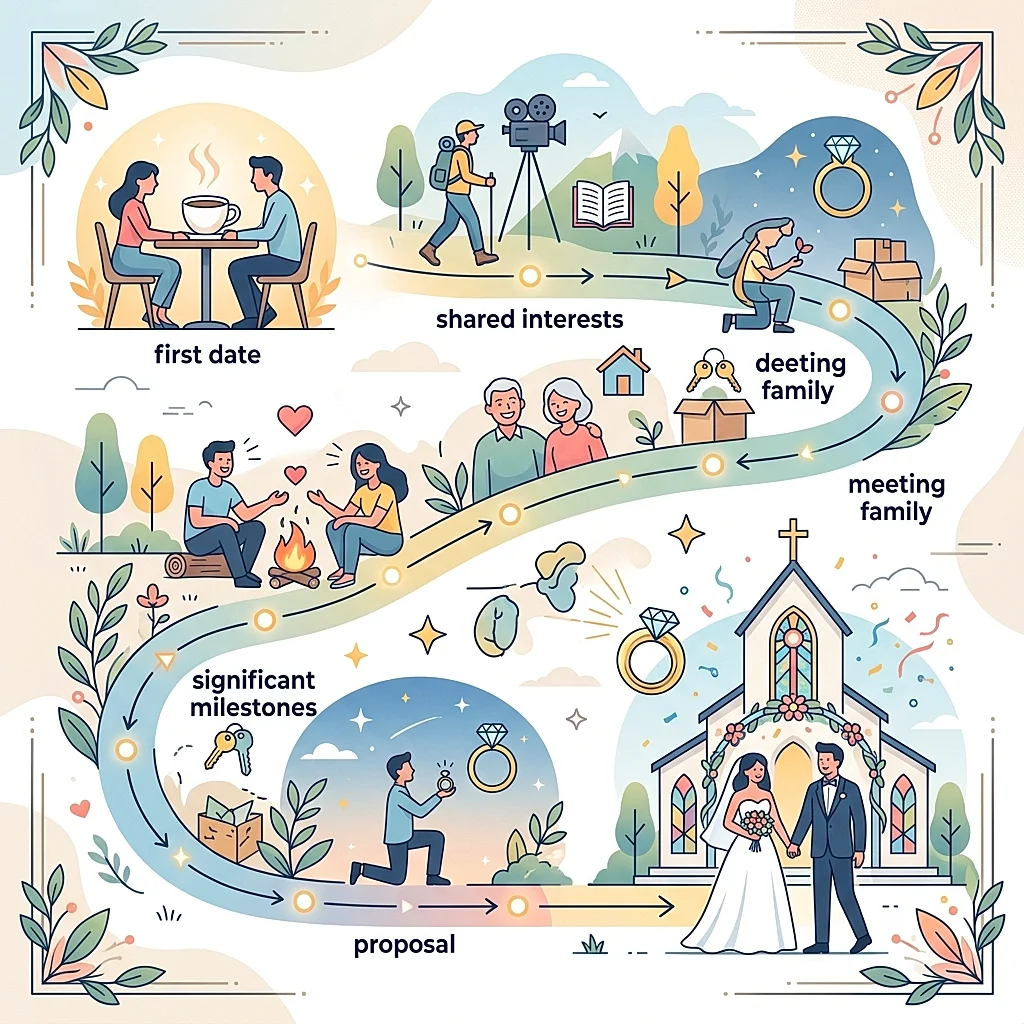
The Timeline: From First Date to Engagement
One of the most debated topics in Christian dating is pacing. Secular culture often encourages dating for three to five years before considering marriage. Christian culture, driven by the desire to avoid prolonged temptation and prioritize family, often moves much faster. But how fast is too fast?
Who Should Initiate the First Date?
The rules of initiation depend heavily on your theological background.
In complementarian circles (which believe men and women have distinct, complementary roles in marriage), it is generally expected that the man should take the lead. He should clearly state his intentions, ask the woman out, and pay for the first few dates to demonstrate his ability to provide and lead. The woman’s role is to be responsive and clear in her boundaries.
In egalitarian circles (which believe roles are interchangeable), mutual pursuit is more common. A woman might ask a man out for coffee, and they might split the check evenly.
Regardless of your theological camp, clarity is key. If you ask a Christian woman to "hang out" or "get coffee," you are inviting confusion. Use the word "date." Tell her exactly what you are doing (e.g., "I'd love to take you on a date this Friday to get to know you better"). Clarity honors the other person.
How Long Should Christians Date?
There is no biblical mandate for a specific timeline. However, pastoral wisdom suggests finding a middle ground between the "microwave marriage" and the "secular stall."
- Too Fast (Under 6 Months): Marrying someone you have known for three months is highly dangerous. You have not experienced enough seasons with them. You haven't seen them angry, financially stressed, or grieving. You are marrying their representative, not the real person.
- Too Slow (Over 2-3 Years): If a Christian couple is in their mid-20s or older and has been dating for three years without an engagement ring, something is wrong. Either there is a fundamental fear of commitment, or they are functionally acting like a married couple without the covenant to protect them.
The "sweet spot" for most healthy Christian relationships is between 12 to 18 months. This allows you to experience a full calendar year together (holidays, birthdays, vacations, and conflicts) while keeping the relationship moving intentionally toward marriage.
The Crucial Role of the Church Community
If you want to know if a relationship will survive, look at how it functions within your community. The Christian dating process is not meant to be a solo mission.
Within the first three months of dating, you should integrate your partner into your existing church community. Invite them to your small group. Have them over for dinner with your married mentors.
Why? Because love is blind, but your community is not. If your best friends, your pastor, and your parents all harbor serious concerns about the person you are dating, you must listen to them. Ignoring the wisdom of your community is a symptom of pride, and it almost always leads to a disastrous marriage.
Frequently Asked Questions (FAQs)
Is it a sin to use online dating apps?
No. Using a dating app is not a sin. The Bible does not prescribe a specific methodology for finding a spouse. An app is merely a digital tool to expand your geographical and social reach. However, if using an app causes you to stumble into lust, covetousness, or superficial judgment, it becomes a wisdom issue, and you should step away.
Should Christians kiss before marriage?
The Bible does not explicitly forbid kissing before marriage. However, many Christians choose to refrain from kissing to protect their physical purity and avoid awakening desires that cannot be righteously fulfilled outside of the marriage covenant. If you choose to kiss, it should be an expression of deep affection, not a gateway to sexual arousal.
What does it mean to be a "Proverbs 31 Woman" in modern dating?
Proverbs 31 describes an industrious, wise, and highly capable woman who fears the Lord. In modern dating, this means looking for (or striving to be) a woman who is not just physically attractive, but possesses strong character, spiritual depth, and a commitment to serving others. It is the opposite of the shallow, appearance-driven culture of secular dating.
How do I know if God wants me to marry someone?
God rarely writes a name in the sky. He gives you His Word (the Bible) and His Spirit to guide you. If the person is a believing Christian, displays the fruits of the Spirit, and your community supports the union, you have the biblical freedom to marry them. It is less about finding a hidden "soulmate" and more about making a wise, God-honoring choice.
Is it okay for a Christian woman to message a man first on a dating app?
Yes. Even in highly traditional circles, sending a polite, introductory message on an app is generally viewed as equivalent to smiling at a man across a crowded room—it signals approachability without usurping his opportunity to lead. If he is interested, he should take the initiative to guide the conversation forward and ask you out.
What is "trauma-dumping" on a date?
Trauma-dumping is oversharing deeply personal, painful past experiences (like abuse, severe family issues, or deep sin struggles) very early in the dating process. This violates emotional purity by forcing a false, unearned level of intimacy. Vulnerability should be earned slowly over time as trust is built.
Can a Christian date someone who is divorced?
Yes, but it requires careful discernment. Jesus explicitly permitted divorce in cases of sexual immorality (Matthew 19:9), and Paul permitted it in cases of abandonment by an unbeliever (1 Corinthians 7). If their previous divorce was biblical, they are free to remarry. If their divorce was unbiblical, marrying them requires deep pastoral counsel and repentance.
Why do so many Christian dating apps charge money?
Building a secure platform with robust verification and hosting costs money. Some apps charge exorbitant monthly fees ($50+) to artificially filter out casual users. However, the best modern apps (like LoveConnet) utilize better technology to offer free messaging while still maintaining extreme safety through AI verification.
What should I do if my parents don't approve of who I am dating?
If you are an adult, you are not biblically mandated to obey your parents in your choice of a spouse, but you are commanded to honor them. Take their concerns seriously. Parents often see red flags (like financial instability or pride) that you are blinded to by infatuation. Seek counsel from a neutral third party, like a pastor.
How do I date gracefully after a bad breakup?
Take time to heal. Do not use a new relationship as a band-aid for your heartbreak. Spend time with the Lord, seek biblical counseling if necessary, and ensure that your identity is rooted in Christ, not in your relationship status. When you can talk about your ex without bitterness or deep pain, you are likely ready to date again.



💬 Discussion (0)
No comments yet. Be the first to share your thoughts!