
Let’s be brutally honest for a second. Dating in your 30s as a Christian woman feels radically different than dating in your 20s. And frankly? It should.
When you were 22, the dating pool felt endless. College ministries were overflowing. Young adult groups had hundreds of singles. You probably dated guys based on proximity, shared classes, or because they played acoustic guitar in the worship band. Fast forward a decade, and the landscape has completely shifted. The young adult groups have dissolved into married-with-toddlers demographics. The Friday night mixers are gone. You’re sitting in church on Sunday morning looking around and wondering, "Did I miss the boat?"
No. You didn't.
What you are experiencing isn't a lack of options. It is a necessary, psychological paradigm shift. Your 30s require an entirely new operating system when it comes to courtship, romance, and spiritual alignment. The superficial metrics that governed your early twenties—like height, income bracket, and how well he dresses—must be ruthlessly replaced with foundational metrics. Things like emotional intelligence. Conflict resolution. Sanctification.
- Proximity is Dead: You can no longer rely on bumping into a godly man at a church retreat. Your 30s demand intentional, strategic placement in environments designed for serious connection.
- Unlearning Bad Habits: The passive waiting taught by 90s purity culture must be replaced with active, discerning faith.
- Ironclad Boundaries: The "talking stage" is a luxury for 21-year-olds. In your 30s, situationships are toxic time-wasters.
- Specialized Tools: General swiping apps destroy mental health. Transitioning to vetted platforms that force intentionality is non-negotiable.
- The Biological Reality: Navigating the pressure of family planning requires upfront, unfiltered communication on the very first few dates.
The Paradigm Shift: Why 30 is the New 20 in Christian Dating
There is a massive misconception in modern church culture that if you aren't married by 28, something is inherently wrong with you. This is statistically and psychologically false. In fact, secular sociologists and Christian counselors agree on one major point: marriages formed in your 30s have a significantly lower divorce rate than those formed in your early 20s.
Why? Because you actually know who you are now.
Think about the woman you were at 23. She was likely insecure, easily swayed by charisma, and terrified of conflict. Now look at who you are today. You have a career. You have walked through the fire of heartbreak and survived. You have likely spent years deconstructing and rebuilding your theology so that it belongs to you, not just your parents or your childhood pastor. You are a fully formed, deeply resilient woman. You do not need a man to rescue you. You need a man to partner with you.
This level of self-awareness is your superpower. But it is also the very thing that makes dating feel harder. You can spot a red flag from a mile away now. A guy who is "nice" but lacks spiritual depth doesn't cut it anymore. A man who loves Jesus but cannot hold down a job or manage a credit card is no longer a "fixer-upper project"—he is a liability.
Dating in your 30s means you are filtering aggressively. And that is exactly what you should be doing.
According to recent demographic studies on Christian singles, the average age of first marriage for religious professionals has shifted from 24 in the year 2000 to 31 in 2025. You are not behind schedule; you are right on the new demographic average.
Deconstructing the Purity Culture Hangover
To truly thrive in the modern dating landscape, we have to address the elephant in the sanctuary: the lingering effects of the 1990s and 2000s purity culture.
If you grew up in the church during this era, you were likely sold a very specific, highly damaging narrative. The message was simple: Guard your heart, kiss dating goodbye, maintain your purity, and one day, God will drop a perfectly tailored, spiritually elite husband directly onto your doorstep while you are quietly reading your Bible.
It sounded incredibly romantic. And it paralyzed an entire generation of Christian women.
Here you are in your 30s. You guarded your heart. You waited. You didn't date the bad boys. And yet, the doorstep remains empty. For many women, this realization doesn't just cause dating fatigue; it causes a profound crisis of faith. "God, I did everything right. Why are the girls who partied in college all married with kids, while I'm still single?"
Here is the hard, liberating truth: God is not a cosmic vending machine where you input good behavior and receive a husband in return. Furthermore, the idea that a woman must remain entirely passive—never initiating, never placing herself in environments to meet men, never taking a risk—is not a biblical mandate. It is a cultural construct.
Faith Requires Action
Consider the book of Ruth. Ruth did not sit in a tent in Moab waiting for Boaz to somehow magically find her. She took bold, strategic, and highly calculated action to place herself in his field. She made herself visible. She signaled her availability and her character. She initiated the interaction that led to their marriage.
Dating in your 30s requires unlearning the passivity of your youth. Creating a dating app profile is not a lack of faith. Asking a friend to set you up with their coworker is not a lack of trust in God's timing. If you needed a job, you wouldn't just sit on your couch praying for a paycheck; you would pray, and then you would aggressively send out your resume. Dating requires the exact same synthesis of radical faith and proactive effort.
You have to take the risk of being seen. You have to risk rejection. You have to step out of the protective bubble of "waiting" and into the messy, beautiful arena of active courtship.
The "Where Are They?" Myth
Once you accept that proactive effort is required, you inevitably hit the next massive roadblock. The question every single Christian woman in her 30s asks her friends over Sunday brunch: "Where are all the good men?"
It feels like a desert out there. You look around your church, and the ratio of single women to single men is heavily skewed. The men who are there are either 22 years old or 55 and recently divorced. It is incredibly easy to buy into the myth that the "good ones" are simply gone, snatched up in their twenties, leaving you with the leftovers.
This is a statistical illusion.
The Invisible Men
There are hundreds of thousands of single, employed, spiritually grounded Christian men in their 30s. The problem is not that they don't exist; the problem is that they are invisible to your current routine.
Men in their 30s are deeply focused on career building. They are exhausted by the weekend. They go to the gym, they go to work, they watch the game with three close friends, and they go to church on Sunday morning—often slipping into the back row right as worship starts and leaving immediately after the benediction to beat the lunch rush.
They are not attending the Tuesday night young adult mixer anymore. They are not volunteering for the greeting team because they travel for work. They are trapped in the exact same routine you are trapped in.
Breaking the Routine
If you want to meet them, you cannot rely on organic, serendipitous encounters at the grocery store. You have to aggressively expand your geographic and digital radius.
This means attending theological conferences, joining high-end Christian professional networking groups, or participating in co-ed intramural sports leagues (even if you hate sports). But more importantly, it means leveraging technology designed to bridge this exact gap. These men are sitting on their couches on Thursday nights, scrolling their phones, wondering where all the godly women are. The internet is the great equalizer. It breaks the barrier of the "back row" churchgoer and forces visibility. We will dive deeper into exactly which apps work (and which destroy your mental health) later in this guide.
Navigating Complex Pasts: The Baggage Reality
In your early twenties, the guys you dated essentially had a blank slate. Maybe they had a messy high school breakup or some lingering immaturity from their frat days, but overall, the canvas was clear. In your 30s, the canvas has been painted on. Sometimes beautifully, sometimes recklessly.
You will increasingly encounter men who are divorced, men who are widowers, or men who are single fathers navigating co-parenting relationships. For many Christian women who envisioned marrying a man who was also entering marriage for the first time, this reality can be a bitter pill to swallow. It feels "second best."
This is where emotional maturity must override your inner Disney princess.
The Divorce Dilemma
Let’s talk specifically about dating a divorced Christian man. Our initial instinct is often highly judgmental. We wonder what he did wrong. We worry about his ex-wife. We worry about the biblical allowances for divorce and whether his previous marriage was legitimately annulled in the eyes of God.
These are valid concerns that must be addressed, but they should not be immediate disqualifiers.
When vetting a divorced man, you are not looking for perfection; you are looking for accountability. A massive red flag in a divorced man is the "victim narrative." If you ask him why his marriage ended and his response is 100% blaming his ex-wife—painting her as entirely crazy, abusive, or unreasonable while he claims to be the blameless martyr—run. A man capable of a healthy second marriage is a man who can say, "She had her struggles, but I also failed to lead our home well in X, Y, and Z areas. Here is what I learned in counseling, and here is how I have actively repented and changed."
Accountability is a massive green flag. It proves he has done the excruciating work of post-mortem analysis on his failure. Ironically, a divorced man who has been deeply humbled by his failure and done the therapy is often a safer bet than a 35-year-old bachelor who has never had his selfishness tested by the fire of a long-term commitment.
If you are dating a single father, observe how he speaks about his child's mother. Even if she is difficult, a high-value man will refuse to trash-talk the mother of his children to a new romantic interest. Respecting the mother is a reflection of his character, not hers.
The Biological Clock and Timeline Transparency
We need to talk about the silent passenger that accompanies every Christian woman on a first date in her 30s: the biological clock. It sits right there in the passenger seat, quietly tapping its watch, turning what should be a fun coffee date into a high-stakes interview.
Secular dating advice will tell you to "play it cool." They tell you not to mention marriage, to hide your desire for children, and to let things flow "organically" so you don't scare him away. This advice is lethal for a woman in her 30s who wants a family. Playing it cool is how you end up in a two-year situationship with a man who ultimately decides he doesn't want kids.
You do not have two years to waste. You need timeline transparency.
How to Communicate Urgency Without Desperation
There is a massive difference between dating with urgency and dating with desperation. Desperation says, "I need to get married right now, and you look like you will fit the suit." Urgency says, "I am highly intentional with my time. I know what I want, and I am looking to quickly identify if we are on the same path."
You shouldn't bring up baby names or ring sizes on date one. But by date three, you absolutely must establish the framework. A high-value Christian man is not scared of a woman who says, "Just to be completely transparent, I am dating with the deep intention of finding a husband and building a family. I’m not interested in casual dating right now. Are we aligned on that?"
If that sentence scares him away, he was never going to marry you anyway. You didn't lose a husband; you lost a time-waster. You successfully protected your timeline.
Furthermore, do not be afraid of the medical realities of your 30s. If you are deeply concerned about fertility, taking proactive steps like consulting a fertility specialist or considering egg freezing can dramatically reduce the background anxiety of dating. When you remove the sheer panic from the equation, you make much better relational decisions.
Rewriting "The List": Discarding the Superficial
Let’s talk about "The List." You know the one. You probably wrote it in your journal when you were 21. He has to be over six feet tall. He has to have dark hair. He has to be a doctor or an entrepreneur. He has to lead worship. He has to make you laugh until you cry every single day.
If you are still holding onto that exact list in your 30s, you are actively sabotaging your own marital prospects. You are filtering out incredible men based on metrics that have zero correlation with a successful, lifelong marriage.
The Difference Between Preferences and Requirements
A requirement is something that, if missing, will destroy the marriage. (e.g., He must love Jesus. He must be faithful. He must not be abusive). A preference is something that would be nice, but is ultimately non-essential to the health of the covenant (e.g., He must be 6'2". He must love hiking. He must make six figures).
Women in their 30s often confuse their preferences for requirements, leading to chronic singleness. You must take a red pen to your list. The harsh reality of adult life is that a six-foot-tall, wealthy entrepreneur who treats you like an accessory will make you profoundly miserable. A 5'9" accountant who listens deeply, holds your hand during a panic attack, and wakes up early to read his Bible will give you a beautiful, secure life.
The New Green Flags
What should you be looking for? Here are the three metrics you must elevate to the top of your list:
- Boring Consistency: We are conditioned by movies to crave the emotional rollercoaster of a "spark." In reality, a healthy relationship often feels slightly boring at first because it lacks anxiety. If he texts when he says he will, plans dates in advance, and shows up on time without playing games, that is a massive green flag. Do not mistake peace for a lack of chemistry.
- Teachable Spirit: How does he react when you gently correct him? Does he get defensive, raise his voice, and turn it back on you? Or does he pause, consider your words, and apologize? A man who cannot be taught cannot lead a family.
- Financial Stewardship, Not Wealth: Earning potential is far less important than stewardship potential. A man making $60,000 a year who lives within his means, gives generously, and saves diligently is a far safer bet than a man making $200,000 who is drowning in credit card debt to maintain a lifestyle image.
The End of the "Talking Stage"
If there is one cultural dating phenomenon that Christian women in their 30s must violently reject, it is the modern "talking stage."
The talking stage is a purgatory of relational ambiguity. It’s when a man follows you on Instagram or matches with you on an app, and proceeds to text you "Good morning" and "How is your day going?" for four consecutive weeks without ever asking you on a physical, in-person date.
He is getting the emotional benefits of your attention—the dopamine hit of a notification, the validation that a beautiful woman is interested in him—without putting any actual skin in the game. He isn't risking rejection by asking you out. He isn't spending money on a coffee. He is simply hovering in your orbit, wasting your most valuable asset: your time.
How to Set the Boundary
In your early twenties, you might have entertained a month-long talking stage because you had the luxury of time, and quite frankly, the boys you were talking to were broke college students. In your 30s, this behavior is unacceptable.
Here is the rule you must adopt immediately: A man has 14 days of digital communication to ask you on a physical date. If day 15 arrives and he is still just sending you memes on Instagram, you cut the cord.
You do not need to be mean about it, but you do need to be definitive. If he texts you on week three asking "What are you up to this weekend?", you can simply reply: "I've really enjoyed chatting with you, but I'm actually not looking for a pen pal right now. Let me know if you ever want to grab a coffee in person! If not, wishing you the best."
This does two things. First, it instantly weeds out the weak men. A man who was just playing games will disappear. Second, it deeply respects the high-value men. If he was just nervous or procrastinating, your directness will shock him into action. Healthy men respect women who respect themselves.
Digital Vetting & Niche Apps
We established earlier that relying on organic, in-person encounters is statistically insufficient for a woman in her 30s. You must be online. But where you are online dictates your entire experience.
If you download Tinder, Bumble, or Hinge, you are entering a broad marketplace. These platforms are designed for the masses. While there are certainly Christian men on those apps, the algorithm forces you to sift through thousands of men who are aggressively opposed to your worldview, looking for one-night stands, or who think putting "spiritual but not religious" in their bio makes them a catch.
The emotional toll of broad-market apps is devastating. You swipe for an hour, match with a guy who looks normal, only to have him send an explicit message within the first five minutes. The fatigue is real.
The Pivot to High-Barrier Platforms
To protect your peace, you must pivot to platforms that do the filtering for you. You need a high-barrier entry platform. This is the exact philosophy behind intentional communities like LoveConnet. When a platform requires users to verify their identity and explicitly align with Christian values, the bottom 80% of the dating pool (the time-wasters, the creeps, the non-committal guys) are instantly filtered out before you even log in.
When you use a platform designed for intentionality, you aren't fighting through the noise; you are immediately engaging with a curated list of men who are also looking for marriage. If you are struggling with the financial aspect of upgrading your digital strategy, there are ways to navigate this. We highly recommend reading our guide on The Ultimate Guide to Free Dating Sites Without Payment (2026 Edition) to understand how to maximize these platforms without breaking the bank.
Your time is worth more than a free app that destroys your mental health. Invest your digital real estate wisely.
First Date Mastery for the 30-Something Woman
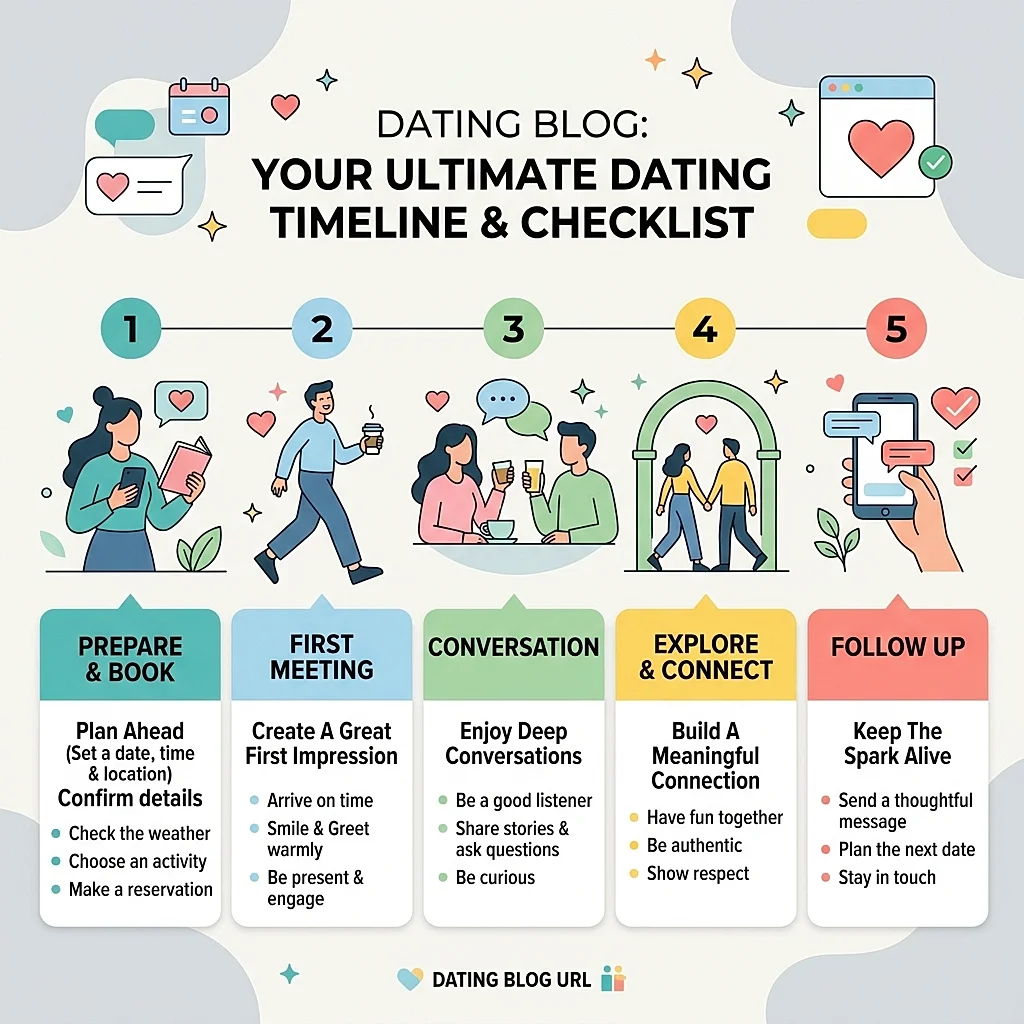
You cut the talking stage short. You used a vetted app. He finally asked you out. Now you are sitting across from him at a coffee shop on a Tuesday night. How do you handle a first date in your 30s differently than you did in your 20s?
First, abandon the concept of the "dinner and a movie" date. A first date is a vetting session, not a romantic comedy. You cannot vet a man's conversational skills or theology in a dark movie theater. First dates should be low stakes, high conversational yield: coffee, a walk in the park, or a quick lunch.
If you don't feel a spark in the first 15 minutes, do not write him off immediately. Men are often incredibly nervous on first dates with women they actually respect. Give him 45 minutes to settle into his personality.
The Questions You Must Ask
Small talk is fine for the first ten minutes (the weather, the traffic, the coffee order), but you must quickly pivot to substance. You don't want to interrogate him, but you do need data. Instead of asking generic questions like "What do you do for fun?", ask behavioral questions that reveal his character.
For a massive list of exact scripts, we built a comprehensive resource: 200+ Questions to Ask on a First Date — Never Run Out of Things to Say (2026).
If you want to dig slightly deeper into his spiritual and emotional framework without sounding like a theology professor, use our guide: 175+ Questions to Ask a Guy — Spark Real Conversations (2026).
Watch how he treats the barista. It is the oldest cliché in the book, but it remains the most accurate predictor of a man's character. If he is charming to you but dismissive, rude, or impatient with service workers, you are seeing the man he will become once the honeymoon phase ends.
The Psychology of Male Pursuit
One of the most exhausting parts of dating is trying to decode male behavior. Does he like me? Is he just busy at work? Is he intimidated by me? Why hasn't he texted back in 48 hours?
We are going to make this incredibly simple. In your 30s, you must operate on this single, foundational truth: If a healthy, mature man wants you, you will know. If you are confused, he does not want you enough.
Healthy male pursuit is not mysterious. It is painfully obvious. When a mature Christian man meets a woman he believes could be his wife, he does not play games. He clears his schedule. He communicates clearly. He risks rejection to lock down your time. If you are constantly having to text your group chat screenshots of his cryptic messages to ask your friends to decode them, you are dating a boy, not a man.
If you are struggling to read the signs, check out our psychological breakdown: How to Know If Someone Likes You: 35 Unmistakable Signs (According to Psychology).
Building the Emotional Connection
Once the pursuit is established and you are moving into an exclusive relationship, the work shifts from vetting to building. This is where your emotional intelligence shines. You must transition from surface-level vetting into deep, vulnerable connection.
To facilitate this, you can utilize structured conversational tools to ensure you are continually peeling back the layers of each other's hearts. Bookmark our ultimate resource: 500+ Questions to Get to Know Someone — The Definitive Guide to Real, Meaningful Conversations.
The Bottom Line
Being a single Christian woman in your 30s is not a curse. It is not a punishment for failing to find a husband in college. It is, quite frankly, a position of immense power.
You have survived your twenties. You know exactly who you are, what you bring to the table, and what you require in a partner. You are no longer willing to settle for a lukewarm, spiritually stagnant, emotionally unavailable boy simply to secure a ring and a change in your marital status.
It will require you to unlearn the passive purity culture of your youth. It will require you to be radically proactive, placing yourself on intentional platforms like LoveConnet where high-value men are aggregated. It will require you to set terrifyingly firm boundaries against men who want to waste your time in the "talking stage."
But the payoff is a marriage built not on the shaky foundation of twenty-something infatuation, but on the bedrock of thirty-something emotional maturity, shared theological conviction, and unshakeable consistency. Keep your standards high. Keep your boundaries firm. And start actively engaging the modern dating landscape with the confidence of a woman who knows her worth.



💬 Discussion (0)
No comments yet. Be the first to share your thoughts!