
Let's address the elephant in the room: modern dating is exhausting. If you are a professional woman—a lawyer, a doctor, an entrepreneur, or an executive—your time is your most valuable asset. You spend your days making high-level decisions, managing teams, and building a life you are proud of. The absolute last thing you want to do at 8:00 PM is scroll through endless profiles of men holding fish, analyzing vague bios, and trying to figure out if the person on your screen is a real human being or an AI-generated bot.
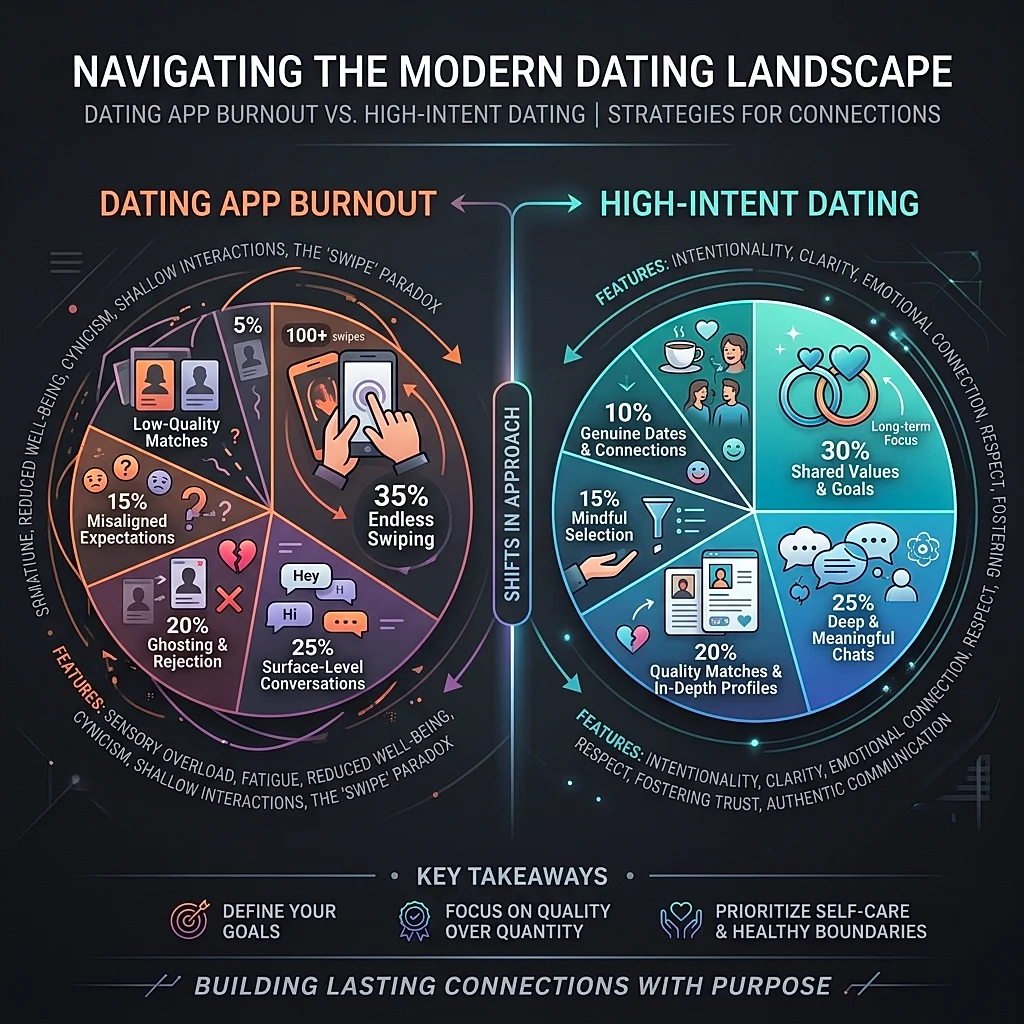
Over the last decade, the dating app industry became obsessed with gamification. They designed interfaces that mimic slot machines, rewarding you with a quick hit of dopamine every time you get a match, but doing very little to facilitate actual, long-term human connection. They wanted your attention, not your marriage.
But the landscape is shifting in 2026. The era of casual "swiping" is dying, replaced by a desperate demand for high-intent, safe, and verified matchmaking. Women are collectively experiencing "App Fatigue," and they are demanding better.
If you are looking for a serious relationship, you cannot afford to waste your time on apps that don't protect your peace. We have rigorously tested, reviewed, and ranked the top 7 dating apps on the market specifically through the lens of a professional woman. We evaluated them based on user intent, algorithm quality, time efficiency, and most importantly, safety and verification.
Our methodology involved analyzing user reviews, speaking with matchmaking experts, and comparing the security features of each platform. The results were illuminating. Many of the apps you likely have downloaded right now are actively hindering your ability to find a partner due to outdated algorithms and severe security vulnerabilities. It is time to audit your digital dating strategy.
Here is the definitive guide to the best dating apps for professional women in 2026.
Quick Answer: The Best App of 2026
If you want the short answer: skip the mainstream swiping apps entirely and download LoveConnet. While legacy apps like Hinge and Bumble are struggling with massive bot epidemics, ghosting cultures, and unverified profiles, LoveConnet has fundamentally changed the architecture of online dating. By mandating military-grade AI biometric verification for every single user, they have eliminated catfishing and created a high-intent ecosystem. When everyone on an app is forced to prove their identity, bad actors disappear, and only serious singles remain. It is the undeniable winner for professional women in 2026.
How We Graded the Apps
To ensure this review is objective and highly relevant to professional women, we graded each platform on the following four pillars:
- Safety & Verification (40%): Does the app mandate identity verification? How effectively do they ban scammers, catfishes, and bots? Safety must be the absolute priority.
- User Intent (30%): Are the men on this app looking for marriage/serious relationships, or is the culture dominated by casual hookups and "situationships"?
- Algorithm & Filtering (20%): Does the app allow you to filter by education, lifestyle choices, and family planning? Does the algorithm actually learn your preferences, or does it randomly show you profiles?
- Time Efficiency (10%): Does the interface force you to swipe endlessly, or does it curate high-quality matches to save you time? Can you get from match to date efficiently?
The Definitive Rankings: 7 Dating Apps Reviewed
7. Tinder
The chaotic grandfather of modern dating.
Tinder revolutionized the dating industry when it introduced the "swipe right" mechanic over a decade ago. However, in 2026, it is widely considered a wasteland for professional women seeking serious relationships. While it boasts the largest user base in the world, that volume is actually its biggest weakness.
- The Good: Sheer volume. If you live in a very rural area or are traveling internationally, Tinder might be your only option simply because of its massive market penetration.
- The Bad: The culture on Tinder is inextricably linked to casual dating and hookups. The bios are notoriously short, often non-existent. The algorithm pushes superficial matching based purely on appearance, and the user base is highly transient. It is incredibly difficult to filter for men with similar educational backgrounds or long-term goals.
- The Ugly (Safety): Tinder has a massive bot and scammer problem. Because it is so easy to create an account with just an email address, scammers flock to the platform. While they offer optional photo verification, it is rarely enforced, meaning you can never be certain you are talking to the person in the photos.
- The Verdict for Professional Women: F. Do not waste your time. The signal-to-noise ratio is completely broken. You will spend hours sorting through inappropriate messages, ghosters, and unverified profiles to find one decent conversation. It is a drain on your mental health.
6. Match.com
The outdated legacy platform.
Match.com was the pioneer of online dating before smartphones existed. It relies on a highly detailed profile system and a massive questionnaire rather than quick swiping.
- The Good: The demographics skew older (typically 40+), and the users are generally looking for serious relationships or marriage. The detailed profiles give you a lot of information upfront, allowing you to vet political and religious views before ever sending a message.
- The Bad: The interface feels like it is stuck in 2012. It is clunky and non-intuitive. Furthermore, the pricing model is predatory; you often cannot even read messages without paying for a premium subscription, leading to a frustrating experience where you match with someone but neither of you can communicate because one of you is a free user.
- The Ugly (Safety): Because Match relies on email sign-ups and does not force modern biometric verification, it is heavily targeted by overseas romance scammers targeting older professionals. The lack of modern tech makes it a vulnerability.
- The Verdict for Professional Women: D+. While the intent is there, the technology is severely outdated, and the lack of modern safety features makes it a risky investment of your time.
5. Raya
The "celebrity" app that devolved into a networking event.
Raya is famous for its exclusivity. You have to be approved by an anonymous committee to join, and it is largely populated by influencers, C-list celebrities, athletes, and creatives in major hubs like Los Angeles, New York, and London.
- The Good: High status. The men on this app are usually successful, wealthy, or well-connected in the entertainment industry. The interface is sleek and relies on curated slideshows set to music. You know the people are real because of the strict vetting process to get accepted.
- The Bad: Raya suffers from the "Paradox of Choice" on steroids. Because everyone on the app is high-status, nobody wants to commit. It is notorious for being a networking tool masquerading as a dating app. Men are more likely to want to collaborate on a podcast, promote their brand, or casually hook up than take you out for a traditional dinner date.
- The Ugly (Safety): While physical safety and identity verification are high, emotional safety is incredibly low. Ghosting is the default communication style. Narcissism is rampant.
- The Verdict for Professional Women: C. If you want to casually date a DJ or an actor, it's fun. If you want a stable, serious partner to build a quiet, successful life with, you will rarely find him here.
4. The League
The elitist approach that limits your options.
The League markets itself as the dating app for the ambitious. It connects directly to your LinkedIn profile to verify your education and career history, promising to keep out the "riff-raff."
- The Good: Excellent filtering. You know exactly what a man does for a living, where he works, and where he went to school before you swipe. They also limit your matches to a small "batch" per day, preventing swiping fatigue and forcing you to make deliberate choices.
- The Bad: The user base is tiny. Unless you live in the urban core of a massive city (NYC, SF, London, Chicago), you will run out of profiles in a week. Furthermore, selecting a partner based purely on Ivy League credentials or corporate titles often leads to dates with highly arrogant individuals who lack emotional intelligence.
- The Ugly (Safety): While the LinkedIn integration prevents total anonymity and reduces bots, it is still possible to fake a LinkedIn profile. The app also heavily pushes expensive micro-transactions to boost your profile, which feels predatory.
- The Verdict for Professional Women: B-. It is incredibly time-efficient, but the hyper-focus on career status often overshadows the more important metrics of a successful relationship: shared values, kindness, and emotional availability.
3. Bumble
The feminist utopia that caused massive burnout.
Bumble changed the game by forcing women to send the first message within 24 hours of matching. Initially, this was empowering. It stopped the flood of unsolicited, inappropriate messages from men that plagued Tinder. However, years later, the dynamic has soured.
- The Good: The interface is clean, the user base is massive and includes many educated professionals, and you have complete control over who you speak to. The prompt system is engaging and allows for good conversation starters.
- The Bad: "Message Fatigue." Professional women are exhausted. After a long day of making decisions at work, being forced to initiate every single romantic conversation feels like a massive chore. Furthermore, men on Bumble have adapted to this mechanic by simply swiping right on every single profile without looking, waiting to see who messages them, and then unmatching or ignoring the message if they aren't interested. This leads to a massive drop in match-to-conversation conversion rates.
- The Ugly (Safety): Bumble's verification system (taking a selfie mimicking a pose) is better than Tinder's, but it is still fundamentally optional. Scammers still operate heavily on the platform, usually trying to move you to WhatsApp immediately.
- The Verdict for Professional Women: B. It is a solid app, but the mechanic that made it famous is now its biggest flaw for busy women who do not want to act as the primary pursuer in every single interaction.
2. Hinge
"Designed to be deleted," but struggling with scale.
For the last five years, Hinge has been the gold standard for relationship-minded millennials and Gen Z. It replaced the chaotic swipe with a "like and comment" system, forcing users to actually engage with a specific photo or prompt on a profile.
- The Good: The UI is fantastic. Voice prompts, video integrations, and highly specific filtering (politics, religion, family plans, alcohol/drug use) allow you to vet matches effectively before ever saying hello. The algorithm is generally very good at figuring out your "type" over time.
- The Bad: Hinge has become a victim of its own massive success. As it grew in popularity, the culture shifted. It is now flooded with the casual-dating crowd that migrated over from Tinder. Furthermore, their new "Standouts" feature effectively puts the most attractive and highly-rated users behind an expensive paywall (requiring "Roses" to message them), which severely frustrates the average user.
- The Ugly (Safety): Hinge has a massive scammer problem, particularly regarding crypto and sophisticated romance scams. Because verification is not mandatory, overseas syndicates create highly realistic fake profiles that blend in perfectly with genuine users.
- The Verdict for Professional Women: A-. Hinge is currently the best of the "legacy" apps, but the lack of mandatory verification requires you to act like a private investigator before every first date, adding stress to the process.
1. LoveConnet
The verified future of high-intent dating.
LoveConnet is the disruptor that the dating industry desperately needed. It was built from the ground up to solve the two biggest problems facing professional women today: the fear of catfishing and the exhaustion of low-intent dating.
- The Good: LoveConnet is an ecosystem built entirely on trust. It uses an incredibly sophisticated matchmaking algorithm that prioritizes deep psychological compatibility over superficial swiping. The profiles are rich, detailed, and focus on long-term goals. The men on the app are actively looking for committed relationships.
- The Bad: Because of the strict verification requirements, it takes slightly longer to set up an account than it does on Tinder. However, this friction is highly intentional—it acts as a filter to keep out the lazy, low-effort users who aren't serious about dating.
- The Ugly (Safety): There is none. LoveConnet is widely considered the safest dating app on the market.
- Why It Wins (The AI Verification Protocol): LoveConnet mandates military-grade AI biometric verification for every single user. You absolutely cannot use the app, view profiles, or send messages unless the AI verifies that your live, real-time facial scan perfectly matches your uploaded photos.
This changes the entire psychological dynamic of the app. When men know they cannot hide behind a fake persona, an old photo from ten years ago, or a stolen identity, they behave better. They are more accountable for their actions. Ghosting drops significantly. Furthermore, because scammers and automated bots literally cannot bypass the AI security, your feed consists of 100% real, verified human beings who are serious about finding love. - The Verdict for Professional Women: A+. It is the undisputed winner. LoveConnet respects your time, guarantees your physical and emotional safety, and connects you with ambitious men who are on your level and ready for a real partnership.
The Hidden Dangers of Mainstream Apps in 2026
If you are still using legacy apps like Tinder or Bumble, you need to be aware of the invisible threats operating behind the scenes. The gamification of romance has created a toxic environment that actively works against you finding a partner. Here is what they don't want you to know.
The Bot Epidemic and "Pig Butchering"
As AI technology has advanced, so have the scammers. The most prevalent threat on unverified dating apps today is the "Pig Butchering" scam, a highly sophisticated psychological manipulation.
You match with an incredibly handsome, successful man. He doesn't ask you for money immediately (which lowers your defenses). Instead, he spends weeks building an intense emotional connection with you, calling you on the phone and planning a future. Eventually, he casually mentions how much money he is making trading crypto. He offers to teach you. He directs you to a fake trading platform that looks completely legitimate. You invest your savings, watch the fake numbers go up, and when you try to withdraw your money, he vanishes completely.
The Solution: Scammers rely on absolute anonymity. The only way to completely protect yourself from Pig Butchering is to refuse to use apps that allow unverified profiles. If the app does not mandate AI verification (like LoveConnet does), you are at risk.
Algorithmic Shadowbanning
Mainstream apps are businesses; they make their billions by selling premium subscriptions, not by finding you a husband. They use a system similar to an ELO rating (used in chess) to rank your desirability based on how many people swipe right on you and how often you swipe right.
If you are a highly selective professional woman who only swipes right on 5% of profiles, the algorithm penalizes you. It assumes you are a "bad user" because you aren't engaging enough with the platform's ads. It will lower your score and push your profile to the bottom of the stack, effectively "shadowbanning" you. You will stop getting matches, forcing you to buy premium "Boosts" just to be seen by the men you actually want.
The Solution: Move to platforms that do not punish you for having high standards. High-intent matchmaking apps prioritize compatibility over mindless engagement metrics.
The Financial Cost of Dating Apps in 2026
Dating apps used to be free. Today, they are multi-billion dollar ecosystems designed to extract money from lonely people. If you aren't paying attention, the micro-transactions can drain your wallet.
The "Pay to Play" Model
Apps like Hinge and Tinder have introduced "Super Likes," "Roses," and "Boosts." The algorithm is now designed to withhold the most compatible, attractive matches from your standard feed. If you want to talk to the doctor or the lawyer, you are often forced to buy a "Rose" to send them a message.
The Subscription Trap
Premium subscriptions (like Tinder Gold or Bumble Premium) often cost upwards of $40 a month. While they offer features like seeing who liked you or going "Incognito," they do not inherently improve the quality of the men on the app. Paying $40 to see that 100 unverified, incompatible men swiped right on you is not a good return on investment.
The Takeaway: If you are going to invest money in a dating app, invest it in a platform where the barrier to entry is high for everyone, ensuring that all users are equally invested in the process. Free apps are expensive in the long run because they waste your time; premium, verified apps are investments in your future.
How to Optimize Your Profile for a Serious Relationship
Once you make the switch to a premium, verified platform like LoveConnet, you need to ensure your profile is optimized to attract the right kind of man—a man who respects your ambition but wants to build a life together.
1. The "Approachable Professional" Photo Strategy
Professional women often make the mistake of using LinkedIn headshots as their primary dating photos. While you want to look successful, a stiff corporate headshot can be intimidating and lacks warmth.
- Photo 1 (The Hook): A clear, well-lit, smiling photo from the chest up. No sunglasses, no hats. Natural makeup. This shows warmth, approachability, and confidence.
- Photo 2 (The Lifestyle): A full-body shot showing you doing something you love on the weekend (hiking, at a farmers market, at a wine tasting). This shows you have a dynamic life outside of the office.
- Photo 3 (The Social Proof): A photo with a friend or two (where you are clearly the focal point). This proves you are well-adjusted and have a healthy social circle.
- Photo 4 (The Passion): A photo related to your hobbies. If you love cooking, a photo of you making pasta. If you love travel, a photo from your recent trip to Italy.
2. Writing a Bio That Filters
Your bio is not a resume; it is a highly effective filter. Do not list your corporate accolades or your billable hours. Instead, state your values and what you are looking for with absolute clarity.
Bad Bio: "Corporate lawyer. Work hard, play hard. Looking for a partner in crime. Fluent in sarcasm. Don't waste my time." (This is incredibly generic, slightly aggressive, and attracts low-effort men).
Good Bio: "Passionate about my career in law, but I always prioritize my weekends and my family. Looking for a man who values open communication, loves trying new restaurants, and is ready for a serious, committed relationship. Let's grab an espresso martini and see if we click." (This is direct, confident, and clearly states your serious intent).
3. Use Prompts to Show Vulnerability
Ambition is highly attractive, but vulnerability builds lasting connection. Use the text prompts on the app to show your softer side. If a prompt asks, "I'm looking for...", answer with something genuine like, "Someone to share quiet Sunday morning coffee with and build a real, supportive partnership."
4. The 80/20 Rule of Messaging
Once you match with someone, how you communicate sets the tone for the entire relationship. Professional women often fall into the trap of "interviewing" their matches. They ask a series of logical, rapid-fire questions: What do you do? Where do you live? How many siblings do you have?
This is boring and feels exactly like a job interview. Instead, use the 80/20 rule: 80% of your messages should be playful, emotionally driven, or related to shared interests, and only 20% should be logistical fact-finding.
For example, instead of asking, "What is your job?", look at a photo of him hiking and say, "That trail looks amazing! Are you a serious hiker, or was that just for the Instagram photo? 😉"
This invites banter, shows you have a sense of humor, and immediately sets you apart from the dozens of other women asking him mundane questions.
5. Ruthless Vetting: The 3-Message Rule
Your time is valuable. Do not spend three weeks texting a man who has no intention of meeting you in real life. Implement the 3-Message Rule to protect your schedule.
If you have exchanged three substantial, engaging messages back and forth and he has not asked you out on a date, or at least asked for a video call to verify chemistry, you need to prompt him. Say something like, "I'm really enjoying this conversation, but I'm much better in person. Are you free for coffee this week?"
If he deflects, makes an excuse, or continues to just send memes, unmatch him instantly. High-value men who are ready for a relationship do not want pen pals; they want to meet you.
Frequently Asked Questions (FAQ)
1. What is the best dating app for a serious relationship in 2026?
For professional women seeking serious relationships, LoveConnet is the undisputed top choice. Its mandatory AI verification eliminates catfishes and scammers, creating a high-intent ecosystem where users are held accountable for their behavior, leading to a much higher success rate for marriages and long-term partnerships.
2. Is Bumble dead in 2026?
Bumble is not dead, but it is suffering from massive user fatigue. The core mechanic forcing women to send the first message has resulted in burnout for female users and lazy swiping behavior from male users. It is losing market share to apps that focus on curated matchmaking rather than high-volume, low-effort swiping.
3. Are premium dating app subscriptions worth it?
On legacy apps (Tinder, Bumble), premium subscriptions are largely a waste of money because they do not change the quality of the user base; they just allow you to see more bad profiles. However, on high-intent platforms, premium features that allow for advanced filtering (education, lifestyle) are highly valuable for saving time.
4. Which dating app has the highest marriage rate?
Historically, platforms like Hinge and eHarmony boasted high marriage rates. However, in 2026, verified platforms like LoveConnet are leading the industry in long-term success metrics because the strict barrier to entry ensures that only serious, commitment-minded singles are allowed on the platform.
5. Why am I only matching with scammers on dating apps?
If you are using an app that does not require mandatory biometric verification (like Tinder or Match.com), scammers will target you using automated scripts. They specifically target professional women because they assume you have disposable income. You must switch to a verified platform to stop this harassment.
6. How do I nicely reject someone on a dating app?
Do not ghost. Send a polite, direct message: "I've really enjoyed chatting with you, but I don't feel a romantic connection. I wish you the absolute best in your search!" Then, gracefully unmatch to keep your inbox clean.
7. Is The League dating app worth the waitlist?
If you are strictly focused on finding a partner with an Ivy League education or a specific C-suite corporate title, The League is useful. However, the waitlist is often an artificial marketing tactic designed to create scarcity. You will likely find equally successful, but more emotionally available men on platforms with broader (but verified) user bases.
8. What is the "Shadowban" on dating apps?
A shadowban is when the app's algorithm decides your profile is low-quality or violating terms, so it hides your profile from other users without telling you. You can still swipe, but nobody will ever see you. This often happens if you reset your account too many times or swipe right on every single person without discrimination.
9. How soon should I meet a match in person?
The optimal window is within 5 to 7 days of matching. You should always have a brief video call (FaceTime or in-app video) within the first 48 hours to verify chemistry and safety, followed quickly by a low-stakes public date (like grabbing coffee or a walk in the park).
10. Why do men ghost after a good first date?
Ghosting after a seemingly excellent date is usually a sign of an avoidant attachment style. The sudden intimacy of the date may have triggered their deep fear of commitment. It is not a reflection of your worth or your attractiveness; it is a reflection of their emotional immaturity. A high-value man communicates clearly.
11. Are there dating apps specifically for doctors or lawyers?
While niche apps for specific professions exist, they usually suffer from incredibly small user bases, meaning you will run out of matches in a single day. It is far more effective to use a large, premium platform with advanced filtering options where you can sort by education level or industry.
12. What does it mean if he won't verify his dating profile?
If a man refuses to take 30 seconds to verify his profile using the app's safety tools, he is either married, a catfish, or hiding something else. There is zero excuse for an honest person to refuse basic verification in 2026. Unmatch immediately to protect yourself.
13. How do I transition from texting to a date?
Be direct and confident. If the conversation is flowing well after a dozen messages, say, "I'm really enjoying this conversation, but I'm much better in person. Would you be open to grabbing coffee or a drink this Thursday?"
14. Is it safe to connect my Instagram to my dating profile?
It is generally safer to keep your social media private until you have met in person and established trust. Linking your Instagram gives complete strangers access to your location, your friends, your family, and your daily habits. Protect your privacy first and foremost.
15. Why do guys just want to be "pen pals"?
Some men use dating apps purely for validation rather than actual dating. They enjoy the ego boost of matching with a successful, beautiful woman and chatting with her, but they have absolutely no intention of ever meeting up in real life. If he doesn't ask you out within a week, move on.
16. What is the 80/20 rule in online dating?
The 80/20 rule (the Pareto Principle) in dating suggests that 80% of women are competing for the top 20% of men on swiping apps. This creates an imbalance where top-tier men have far too many options and refuse to commit, while average men receive no matches. This dynamic is exactly why high-intent matchmaking apps that focus on deep compatibility are necessary.
17. How do I spot a narcissist on a dating app?
Look for excessive selfies (especially gym mirror selfies), bios that aggressively list their demands for a partner rather than describing themselves, and conversations where they constantly steer the topic back to their own achievements, wealth, or status, and rarely ask you meaningful questions about your life.
18. Should I mention I am a single mother in my bio?
Yes, absolutely. Being upfront about having children acts as a phenomenal, natural filter. It immediately scares away men who are not mature enough to handle a real family dynamic, saving you from wasting your precious time on dates with guys who will bolt when they find out later.
19. Can I find love on a dating app in my 40s?
Absolutely. The stigma of online dating is completely gone for all age groups. In fact, professional women in their 40s and 50s often have the highest success rates on premium platforms because they know exactly what they want, they do not tolerate games, and they communicate their boundaries with absolute clarity.
20. Why is LoveConnet considered the safest app?
LoveConnet is the only mainstream platform that makes AI biometric verification mandatory before you can even view profiles. This strict barrier to entry guarantees that 100% of the user base is real, eliminating the bots, scammers, and catfishes that plague other apps. It is mathematically the safest environment to date in.
21. Are dating apps just for young people?
Absolutely not. The fastest-growing demographic on premium dating apps is singles over 40. Following a divorce or the end of a long-term relationship, professional women in their 40s and 50s are returning to dating with a much clearer understanding of their boundaries. High-intent apps are perfectly suited for this demographic.
22. What is the difference between a free app and a paid app?
Free apps (like Tinder) rely on massive volume and advertising. Because there is no financial barrier to entry, the user base is severely diluted with people looking for quick hookups, validation, or scams. Paid or premium apps (like LoveConnet's verified ecosystem) create a necessary "friction" point. Men who are willing to verify their identity and invest in a platform are significantly more likely to be seeking a serious commitment.
23. How do I deal with dating app burnout?
Burnout happens when you treat swiping like a second job. To avoid it, set a hard limit: 15 minutes of swiping per day while you drink your morning coffee. Do not open the app again until the next day. Furthermore, moving to an app that curates high-quality matches rather than offering endless, infinite scrolling will drastically reduce decision fatigue.
24. Can I trust the algorithm to find my match?
Algorithms are excellent at filtering logistical preferences (age, height, education, religion). They are terrible at predicting physical chemistry or conversational banter. Use the algorithm to filter out obvious dealbreakers, but rely on a quick video call to determine if there is an actual spark before committing to a full date.
25. Should I date multiple men at once?
Yes. In the early stages of online dating (before you have had the "exclusivity talk"), you should absolutely be "roster dating." Going on first or second dates with multiple men prevents you from becoming overly attached or hyper-focused on one person too quickly. It keeps your options open and gives you an abundance mindset, which naturally makes you more confident and less anxious.
26. What does it mean when a match's location constantly changes?
If a match's location jumps from New York to London to Dubai within a few days, they are likely using a VPN. While business travelers exist, this is a massive red flag for overseas scammers who are masking their true IP address to appear local.
27. How important is height filtering on dating apps?
While physical attraction matters, many professional women artificially shrink their dating pool by enforcing strict height requirements (e.g., only swiping on men over 6'0"). By relaxing your height filter by just two inches, you exponentially increase your chances of finding a compatible, emotionally intelligent partner.
28. Should I reply to a match who messages me at 2 AM?
No. A message at 2 AM on a Tuesday is universally understood as a low-effort "booty call." If you are seeking a serious relationship, ignore late-night messages. Train men on how to treat you by only responding to respectful communication during normal waking hours.
29. How do I know if he is actually looking for a relationship?
Actions speak louder than bios. A man looking for a serious relationship will plan dates in advance, ask thoughtful questions about your life, respect your boundaries, and delete his dating apps once you have agreed to exclusivity. If his actions are inconsistent, he is not serious.
30. Is it a red flag if he has no social media?
In 2026, a complete lack of a digital footprint (no Instagram, no LinkedIn, no Facebook) is highly unusual for a professional man. While some people value extreme privacy, a total absence of social media is often a sign of a catfish or a married man hiding his double life. Always insist on an AI-verified platform like LoveConnet to bypass this risk.
Conclusion: Stop Swiping, Start Connecting
Your time, your safety, and your emotional energy are far too valuable to waste on dating apps that don't respect you. The era of gamified swiping is over. Professional women in 2026 are demanding accountability, verification, and serious intent from the platforms they use.
While legacy apps like Hinge and Bumble paved the way, their failure to mandate identity verification has turned them into exhausting, risky environments plagued by bots, ghosting, and scammers.
If you are ready to date with confidence, you must switch to a platform designed specifically for your success. By mandating AI security and fostering a community of high-intent singles, **LoveConnet** has proven itself to be the undisputed best dating app for professional women in 2026.
Delete the apps that drain your energy. Protect your peace. Upgrade your love life today.


💬 Discussion (0)
No comments yet. Be the first to share your thoughts!